
October · Black History Month
African Mask Painting
Create African masks with intricate geometric designs.
- Key stages
- KS1 to KS2
- Session length
- 60–90 minutes per class
- Group size
- Up to 30 pupils per session
- Formats
- Single class, year-group carousel or full day
How the session runs
Introduction
Background and materials
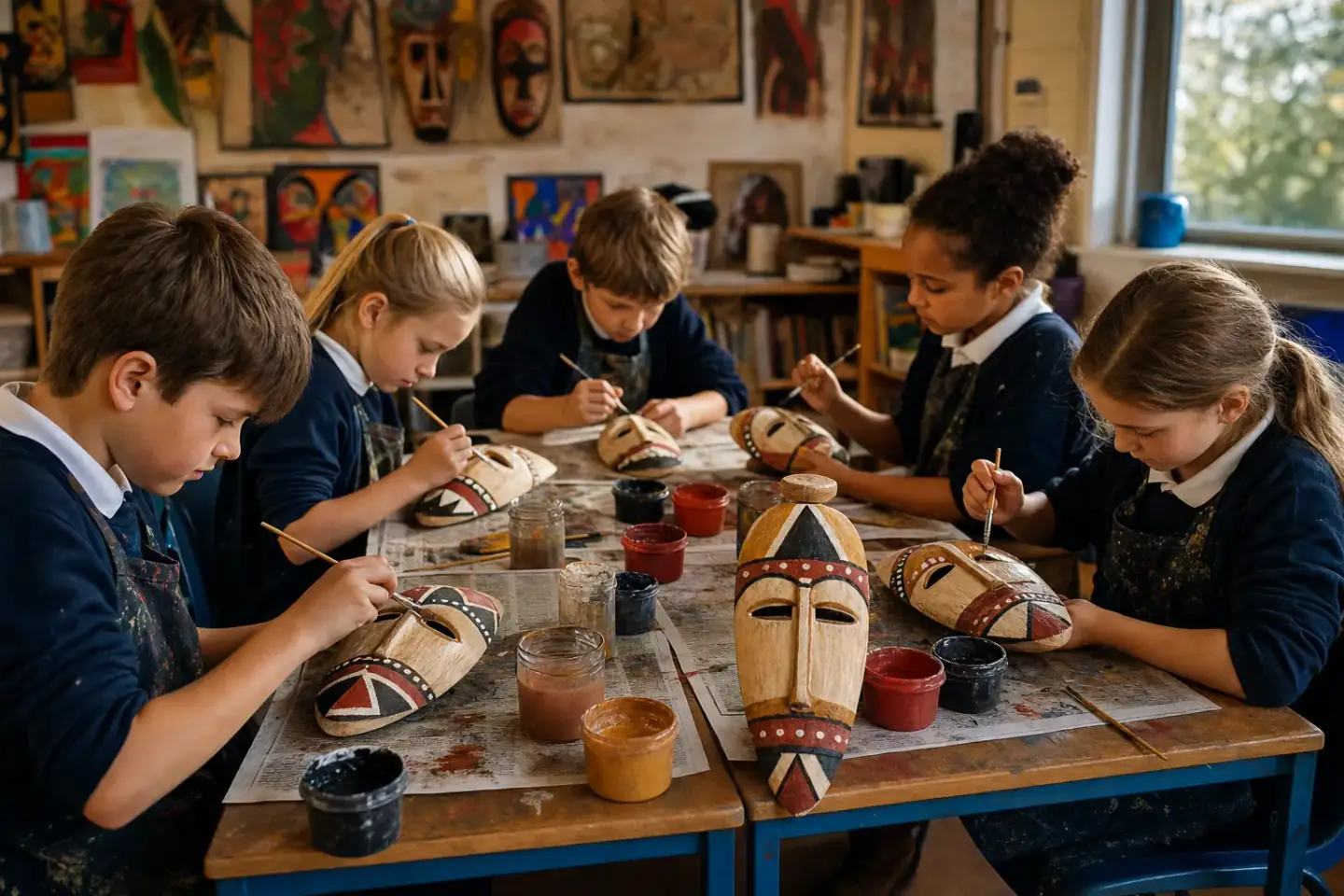
Children are introduced to the rich traditions of African art, where masks often represent the faces of spirits and gods. They learn about the Dan mask, which is made from sustainable Albesia wood grown on family-run farms, making this creative journey friendly to our planet.
The traditions
Understanding the Culture
Traditional Dan masks from the Ivory Coast and Liberia rely on highly structured geometric shapes and symmetrical patterns. The Dan people use these shapes to represent different spiritual energies, dividing their styles between gentle, idealised beauty (Deangle) and fierce, dramatic power (Bugle).
Before any paint
The rules of the pattern
Symmetry, repetition, contrast and line weight. Pupils practise the motifs on paper first, so the design is decided before a brush touches the mask.
Design
Their own subject
Every pupil designs a mask that shows something special about themselves, just like the original makers did. They choose one specific art tradition to work in, so their mask follows a clear style instead of mixing too many together.
The making
Paint and build
Pupils press acrylic paint onto their masks using a dowel, with the facilitator moving round the tables as they work.
The display
The wall
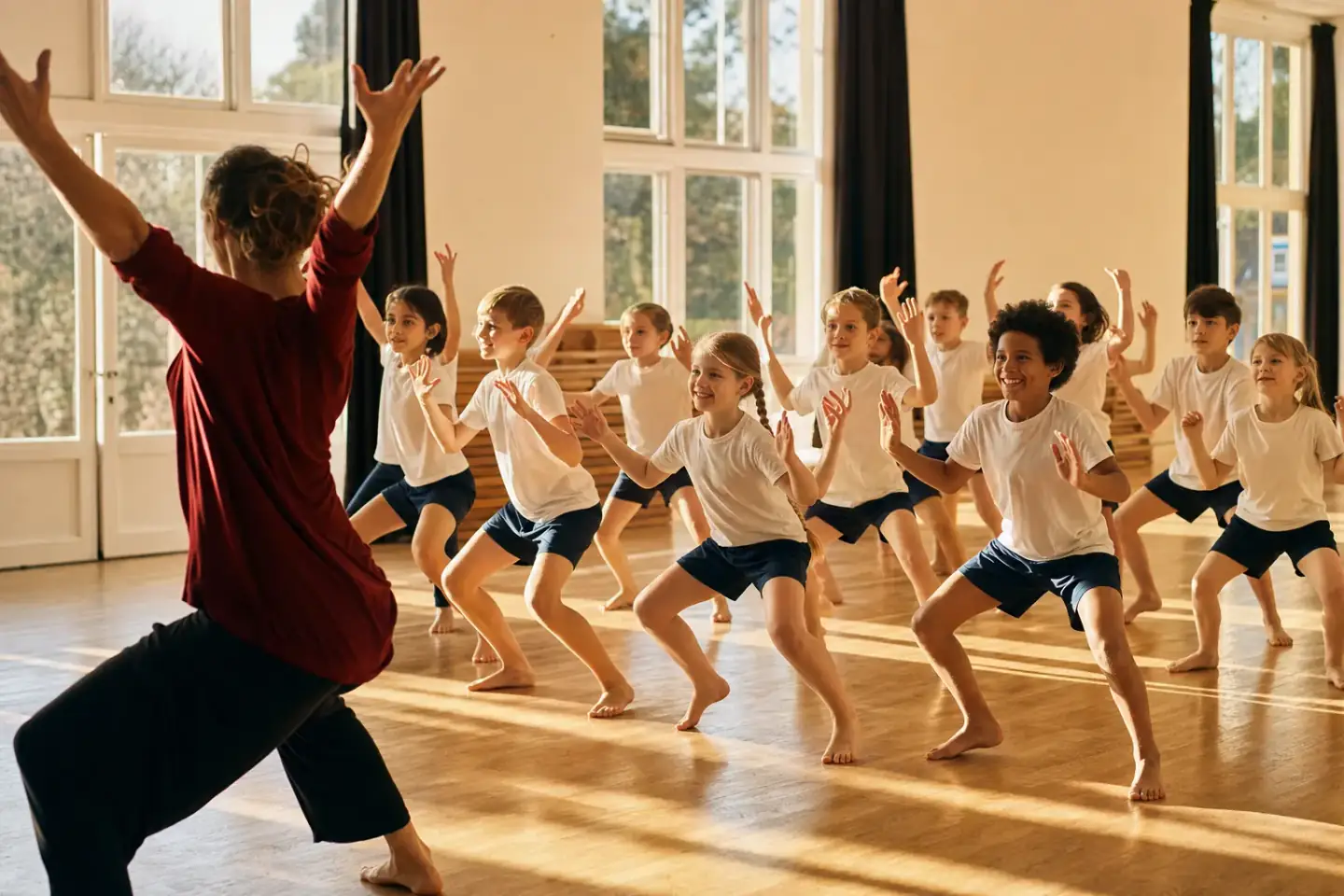
Finished masks can be put up in a class display, taken home by parents as part of a fundraiser, or used by the pupils in our African dance workshop.
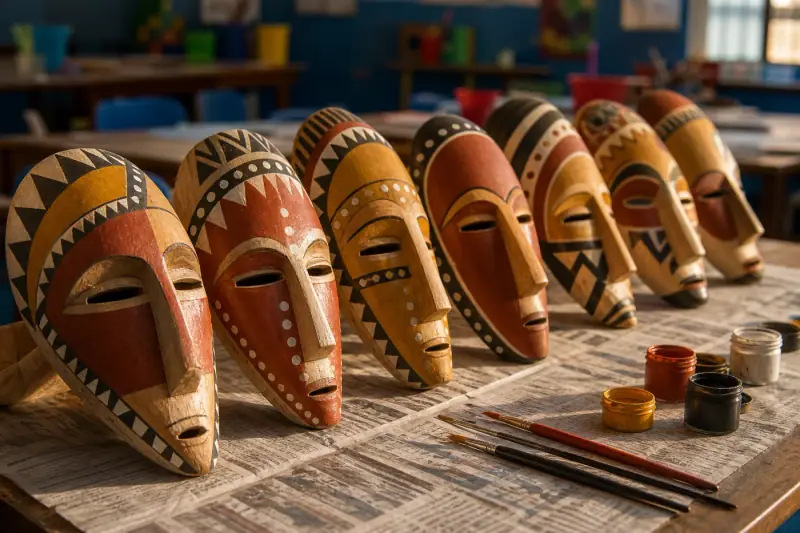
Children design a mask that says something about them.
What pupils will learn
- Where masks sit in West and Central African cultural traditions — who makes them, and what for
- That African art is not one style: which regions the forms in front of them come from, and how far apart those places actually are
- How design rules differ between traditions, and what is lost when they are flattened into a single generic look
- How pattern, symmetry and colour carry meaning in African design
- The difference between drawing on a tradition respectfully and appropriating it
- Dowel control, layering and surface texture on a three-dimensional form
- How to explain the choices behind their own design, and how to ask a classmate about theirs
Curriculum links
KS1 to KS2
- Art and Design, KS1
- Use drawing, painting and sculpture to share ideas; learn about the work of a range of craft makers and designers.
- Art and Design, KS2
- Improve mastery of art and design techniques; learn about great artists and designers in history.
- Geography, KS2
- Locational knowledge of Africa: naming countries and regions on a map, and describing how sharply human geography changes across the continent.
- RE and PSHE
- Respect for cultural and religious practice, including a direct, age-appropriate conversation about appropriation and about describing a tradition accurately instead of folding several into one.
What we bring
- A blank wooden mask for every pupil, plus paints, dowels and aprons.
- Reference masks from more than one region, sturdy enough for pupils to handle and compare side by side
- A DBS-checked facilitator who teaches the cultural context alongside the technique
- Table coverings and aprons for every child
What we need from you
- Tables the class can work around in groups of about six, and floor covering if the room is carpeted
- Access to a sink or a couple of buckets of water
- A class teacher present throughout
- Somewhere flat where thirty masks can dry
When to book
October
Black History Month runs throughout October in the UK. We recommend booking several months in advance as October is one of our busiest months.
Reviews for our workshop team
What schools say about our Black History Month workshops
“We have had a number of experiences from the Education Group and are always impressed by the quality of the workshops. We return to them time after time because we know that the planning, content and age-appropriateness of their sessions are absolutely right for the children.”
Kate Baguley “Our infant school aged pupils enjoyed the Maypole experience and were amazed to see the maypole in the middle of their playground. The teacher was fantastic with our young children and we all managed to come away from our sessions feeling we had learnt something rather wonderful!”
St Peter's “Highly recommend the African mask workshop! It's one of the highlights of the Year 5 calendar. Well worth every penny”
Joanne Netto “What a great experience for the children! Ivan was amazing at keeping their interest and making the drumming session as active and exciting as possible.”
Demelza Jones “A great workshop. Fantastic resources and Chris was great with the children. They were engaged throughout and talked about it for ages afterwards. This is the third time we have used them and they never disappoint!”
Julie Gill “Fantastic workshops for primary school children - the facilitators Emma for African drumming and Naomi for dance workshops were friendly, skilled and provided a very enjoyable experience for the children. Thank you!”
Aleksandra Dass
Questions schools ask
Does it work on a whole-school diversity day on 21 May?
Yes, and that is one of the two dates it is written for. The comparative work carries the day: pupils examine forms from different regions side by side and learn that the rules are not shared, which is the opposite of one culture standing in for a whole continent. It drops into a carousel with sessions from other cultures, and the finished masks go up alongside whatever the other classes have made.
Can it sit inside our Black History Month teaching in October?
Yes. In October the facilitator leans harder on the meaning of the objects and on the appropriation question, and the masks and their design cards make a display the class can talk a visitor through.
How messy is it?
Manageable. Acrylics on a mask form, one table per six pupils, and we cover surfaces before we start and clear them before we leave. Aprons are recommended, as the paint does not wash out of school uniform very well, so pupils need to take care to avoid getting paint on their clothing. The floor is the main thing to protect if the room is carpeted.
Do pupils keep the masks?
Yes. They need a day or two to dry properly, then they go home — or stay up as a display first, if you would rather.
How long should we allow?
Sixty minutes is enough for EYFS, KS1 and KS2. This allows time for the design discussion and for pupils to create a finished piece.
Can we combine it with drumming or dance?
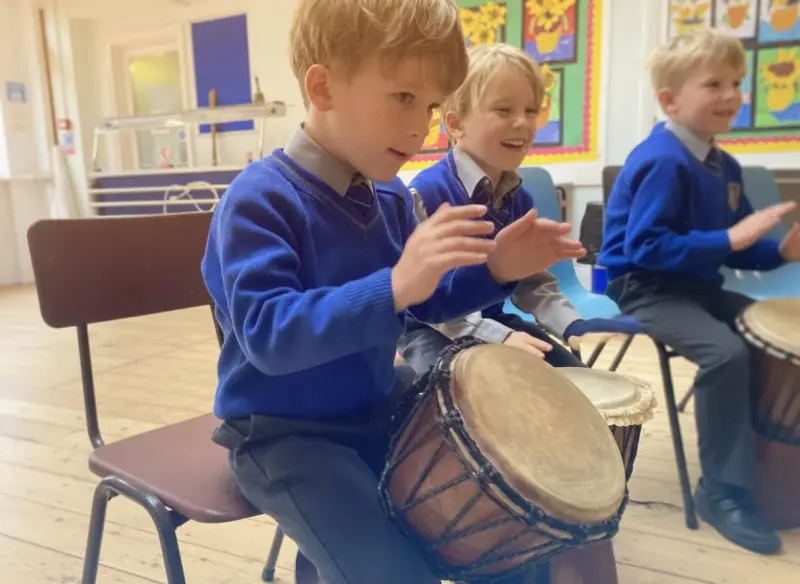
Yes, and most full-day bookings do exactly that — a carousel of two or three sessions so every class gets a turn at each.
Create African masks with intricate geometric designs.
Tell us the date you have in mind and we'll come back within one working day with options for your school.