
Jan / Feb · Chinese New Year
Chinese Plate Painting
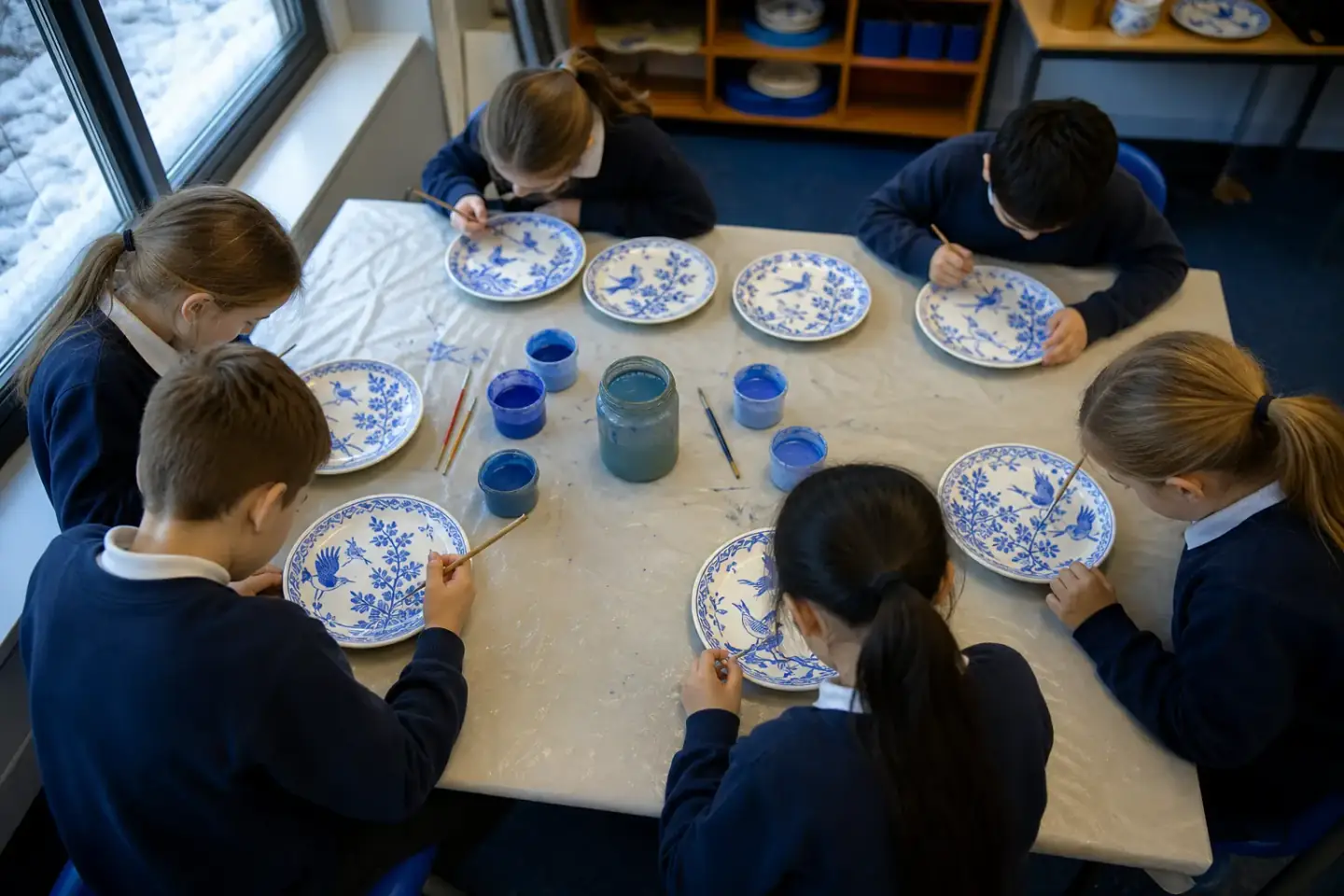
Each child has the opportunity to create their own unique design.
- Key stages
- KS1 to KS2
- Session length
- 60–90 minutes per class
- Group size
- Up to 30 pupils per session
- Formats
- Single class, year-group carousel or full day
How the session runs
Introduction
What Chinese New Year is
The facilitator introduces the festival: its three names, when it falls and why the date moves, the week-long public holiday, the twelve zodiac animals and which one this year belongs to, and the customs — lanterns, red for luck, the lion and dragon dances, firecrackers and the red envelopes handed out with money inside.
The logo
Small brush first
The stamped logo on the plate is painted first, with the small brush. Changing colour is taught as part of it — a gentle wash in the water, then dried on the cloth at their place — so every colour that follows goes on clean.
The background
Their own pattern
Pupils then decorate the background around the logo with a pattern of their own choosing. Symmetrical patterns look particularly effective, and the facilitator steers pupils towards a clean, clear design rather than filling every gap — the area immediately around the stamped logo is left alone, because less is more.
The dots
Using the stick end
The wrong end of the brush makes the cleanest dots, two or three at a time before it needs more paint. It is the technique pupils enjoy most and the one that lifts an ordinary pattern.
Colour choice
Two or three, not all six
There are five or six colours on the table and nobody has to use them all. The facilitator encourages pupils to pick two or three and commit to them, which is what makes the finished plates look designed rather than decorated.
Drying
Left somewhere safe
The plates are carried carefully somewhere flat and left for at least half an hour. The facilitator explains plainly that these are decorative plates rather than dinner plates, and that they should never go in a dishwasher.
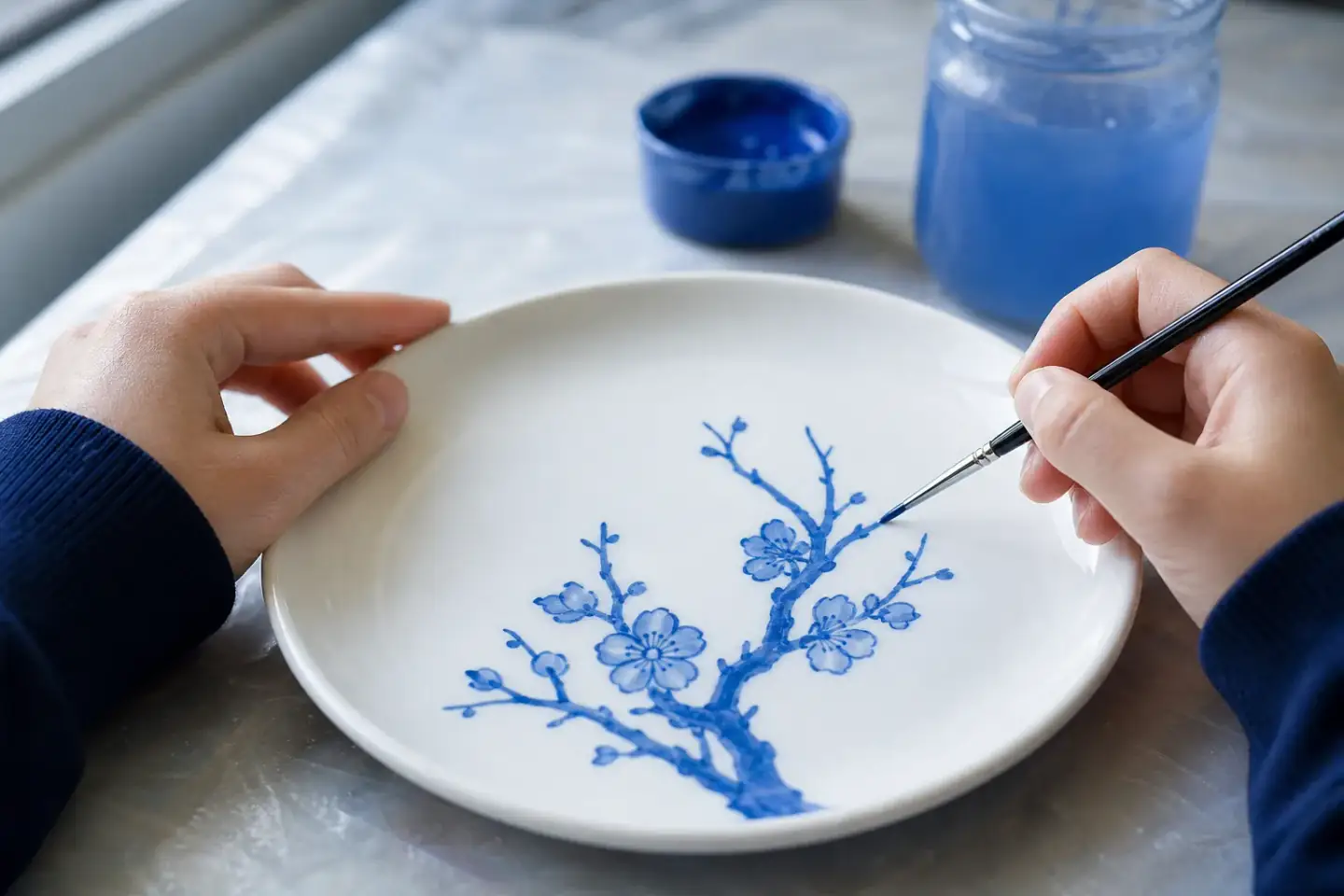
Less is more with a clear, simple pattern.
What pupils will learn
- That Chinese New Year is also called Lunar New Year, the Lantern Festival and the Spring Festival
- When it falls — late January to early February, depending on the lunar calendar — and that it is marked with a week-long public holiday
- That the years of the Chinese zodiac are named after twelve animals, and which animal this year belongs to
- The customs of the festival: lanterns, red for luck, lion and dragon dances, firecrackers and fireworks, and red envelopes given with money inside
- Brush control on ceramic: using the small brush for detail and keeping a line steady on a curved surface
- Using the stick end of the brush to make clean, even dots
- Composing a pattern around a fixed element, and why symmetry and restraint make a design work
- Choosing a limited palette on purpose rather than using every colour available
Curriculum links
KS1 to KS2
- Art and Design, KS1
- Use drawing and painting to develop and share ideas; learn about the work of a range of artists, craft makers and designers.
- Art and Design, KS2
- Improve mastery of art and design techniques, including painting, with a range of materials.
- Geography, KS2
- Locate China on a world map, and understand why a festival date set by a lunar calendar moves from year to year.
- RE, agreed syllabus
- Festivals and celebrations: what Chinese New Year marks, the customs that carry it, and how a community keeps a major holiday.
- PSHE and British Values
- Mutual respect: learning the customs of a celebration properly before making something that belongs to it.
What we bring
- A ceramic plate for every pupil, each with the stamped logo ready to paint, plus spares
- Paints, a small and a large brush each, and pencils
- Tablecloths to cover every surface pupils paint on, cloths and kitchen roll for washing and drying brushes, and cups of water on every table
- An apron for every child, handed to the organiser at the start of the day
- A DBS-checked facilitator who introduces the festival and this year's zodiac animal before anybody paints
What we need from you
- Tables the class can sit round in groups of about six, plus floor covering if the room is carpeted
- Pupils arriving with sleeves rolled up, ready to put an apron on
- A sink in the room, or clean water for refilling the cups between classes
- A member of teaching staff with the class throughout
- Somewhere flat and undisturbed where thirty plates can dry for half an hour or more — a trolley is ideal, a windowsill in a busy corridor is not
When to book
Jan / Feb
Chinese New Year follows the lunar calendar and typically falls in late January or February. The zodiac animal changes every year — we'll confirm both when you book.
Reviews for our workshop team
What schools say about our Chinese New Year workshops
“Fantastic workshops for primary school children - the facilitators Emma for African drumming and Naomi for dance workshops were friendly, skilled and provided a very enjoyable experience for the children. Thank you!”
Aleksandra Dass “We have had a number of experiences from the Education Group and are always impressed by the quality of the workshops. We return to them time after time because we know that the planning, content and age-appropriateness of their sessions are absolutely right for the children.”
Kate Baguley “Our infant school aged pupils enjoyed the Maypole experience and were amazed to see the maypole in the middle of their playground. The teacher was fantastic with our young children and we all managed to come away from our sessions feeling we had learnt something rather wonderful!”
St Peter's “Highly recommend the African mask workshop! It's one of the highlights of the Year 5 calendar. Well worth every penny”
Joanne Netto “What a great experience for the children! Ivan was amazing at keeping their interest and making the drumming session as active and exciting as possible.”
Demelza Jones “A great workshop. Fantastic resources and Chris was great with the children. They were engaged throughout and talked about it for ages afterwards. This is the third time we have used them and they never disappoint!”
Julie Gill
Questions schools ask
What are the plates, and do pupils keep them?
They are real ceramic plates carrying a stamped logo for pupils to paint, and yes, pupils keep them. We tell every class plainly that these are decorative plates rather than dinner plates, and that they must not go in a dishwasher.
How messy does it get?
Contained. We cover the working tables, one table serves about six pupils, and water pots stay in the middle. The paint does not come out of school uniform very well, so aprons are recommended to help protect clothing.
Do pupils need to be good at art?
No. The stamped logo gives every plate a strong centre before a pupil adds anything, and the pattern around it is built from simple repeated marks and dots. Pupils who say they cannot draw usually finish with something they are pleased with, because the pattern does the work.
Can it run alongside the dragon dance on the same day?
Yes, and most full-day bookings do exactly that: a quiet making session and a loud moving one, with classes swapping over at the halfway point. Whole-school days on 21 May are usually built the same way, with the finished plates going up on a corridor display beside work from the other sessions.
Is the session different for Chinese New Year and for 21 May?
The painting is the same. For a Chinese New Year booking the introduction goes further into the festival itself — the zodiac animal whose year is starting, and the customs a family keeps that week. For World Day for Cultural Diversity more of the time goes on the celebration as one of many a class might mark, alongside the other sessions running that day.
The other Chinese New Year sessions
All of Chinese New Year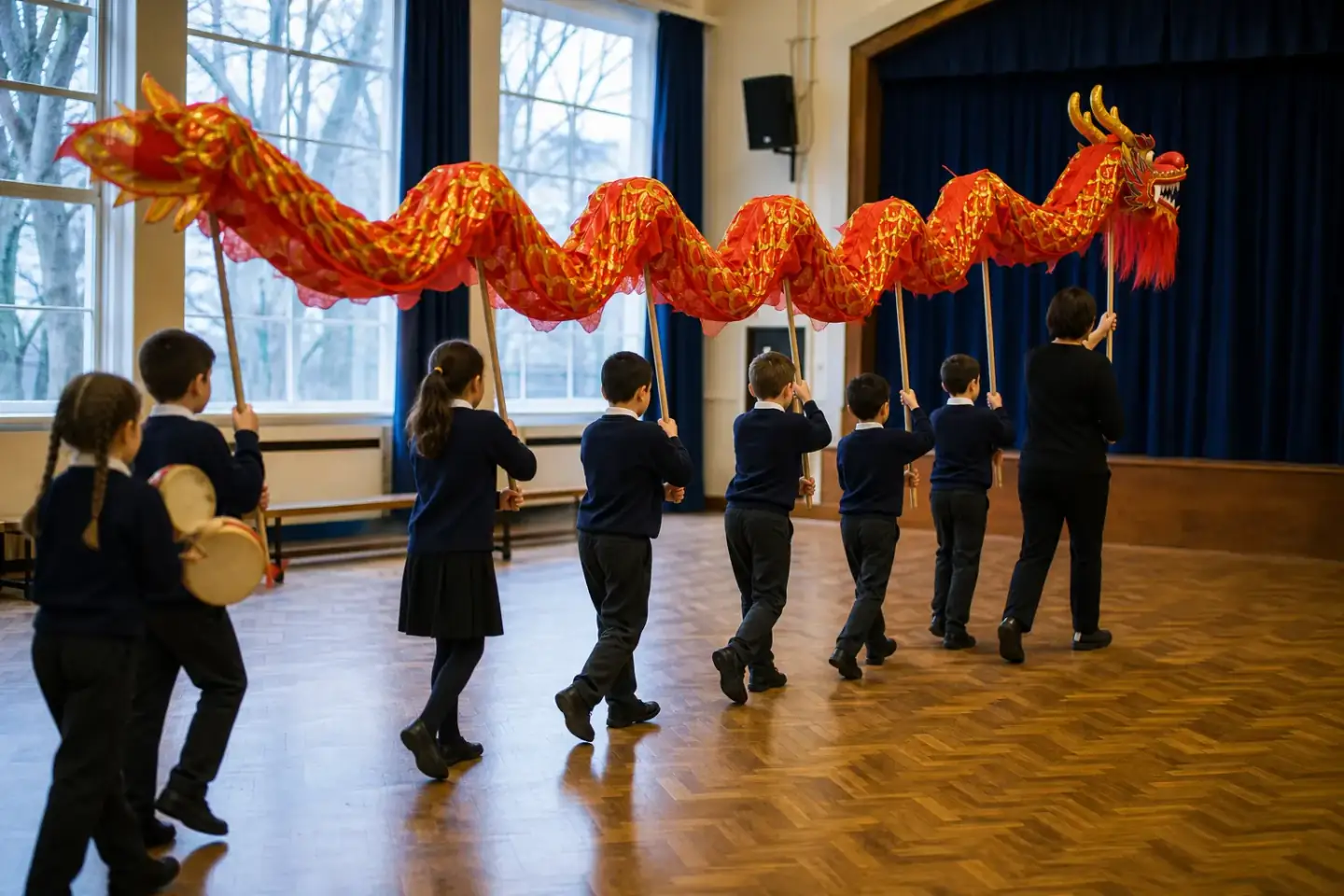

Each child has the opportunity to create their own unique design.
Tell us the date you have in mind and we'll come back within one working day with options for your school.