
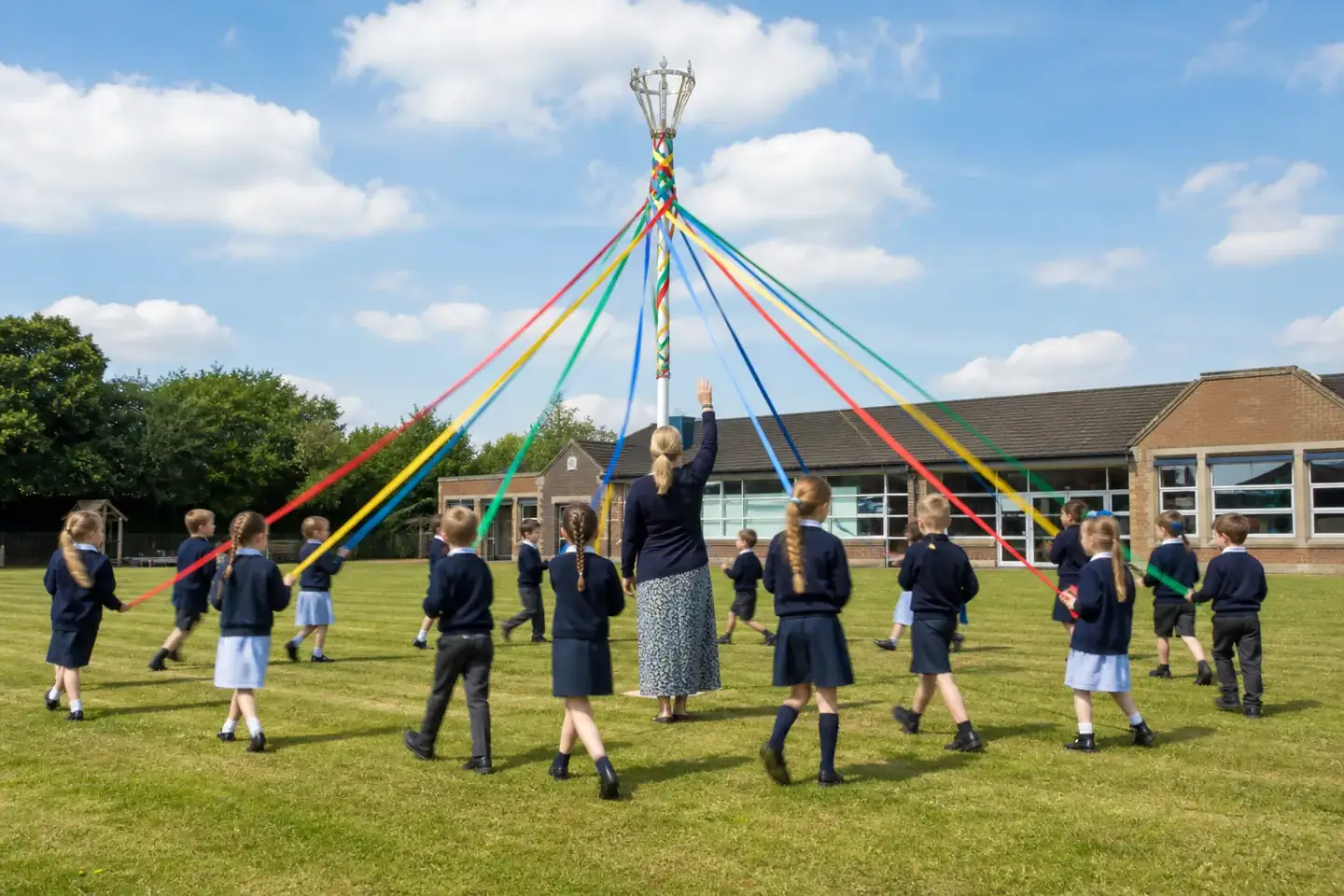
21 May · Cultural Diversity
Maypole Dance
Ribbons, weaving patterns and lively folk music.
- Key stages
- EYFS to KS2
- Session length
- 45–60 minutes per class
- Group size
- Up to 30 pupils per class, dancing in sets and swapping over
- Formats
- Class sessions, a year-group session, or a full day ending in a performance
How the session runs
Introduction
Where maypole dancing comes from
The facilitator introduces the connection with May Day and spring celebrations and is straight with the class about the history: maypole traditions grew up differently in different communities and have changed over time, so what they are about to learn is one traditional-style approach rather than the one true dance.
Warm-up
Moving together, no ribbons yet
Lively folk music goes on and the class warms up in the open space with nothing in their hands: walking, skipping and gentle jogging, then stepping forwards, backwards and sideways, changes of direction and level, and clapping or stepping to the beat. Stopping and starting together is practised deliberately here, because the whole dance later depends on it.
Explore movement
Round the pole, then over and under
Pupils take up the basic maypole formation and start simply: walking or skipping around the pole, keeping an even distance, moving in time with the music, and staying aware of the dancer in front and behind. One direction first, one repeated pattern. Only then does weaving come in — passing over and under the ribbons — with the class listening for the instruction and responding together.
Create and practise
Building a sequence
Pupils work in groups around the pole and build a short sequence from what they have explored, combining walking, skipping, changes of direction and weaving. Position, spacing and a steady rhythm matter more than individual flourish, and everything is practised slowly before the speed comes up.
Performance
Perform it
Groups perform their sequence for one another, or the whole class dances a final performance together. Timing, teamwork and keeping the ribbons untangled are what the facilitator asks them to concentrate on. If you would like it recorded, this is the moment — plenty of schools use the clip in an assembly or on a newsletter.
Cool down
Stretch and reflect
The class moves away from the pole for gentle stretches and breathing exercises, then reflects in pairs or alone: what they learned about maypole dancing, why teamwork matters so much in it, how they made patterns with the ribbons, what was hard about keeping in time, and what weaving, sequence, folk dance and collaboration mean.
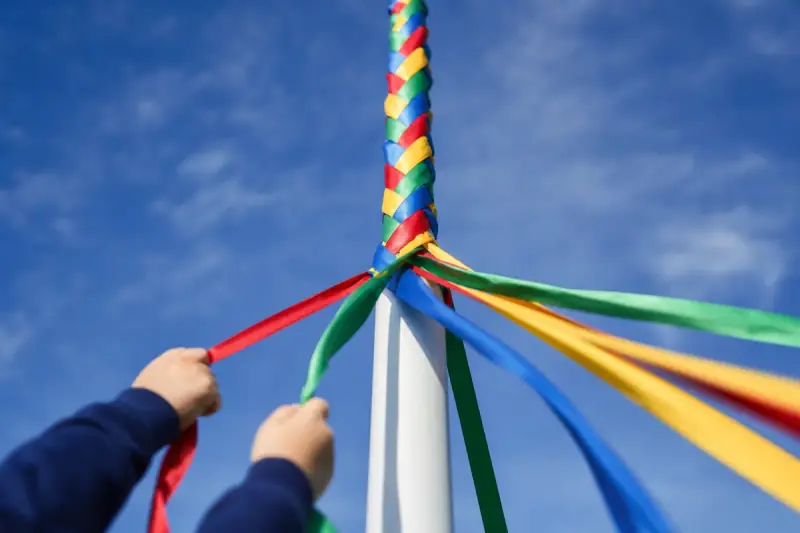
The pattern is the proof and appears above only if every dancer holds their place and keeps time.
What pupils will learn
- That maypole dancing is a folk dance associated particularly with England and other parts of Britain, danced at May Day, in spring and at community festivals
- That maypole traditions vary between communities and have changed over time — there is no single universal maypole dance
- How the patterns are made: dancers moving around the pole with ribbons fixed to the top, passing over and under one another's ribbons
- That traditional dances use set patterns, stepping sequences, skipping and changes of direction
- The vocabulary — maypole, ribbon, weaving, sequence, pattern, folk dance, coordination and collaboration — learned while dancing
- Keeping position, spacing and an even distance while staying aware of the dancer in front and behind
- That maypole dancing is collaborative: listening, holding your place and working together is what makes the pattern appear
- Creating and practising a short sequence in a group, then performing it with attention to timing and teamwork
Curriculum links
EYFS to KS2
- Dance within PE, KS1
- Perform dances using simple movement patterns, keeping time with the music while travelling in a ring.
- Dance within PE, KS2
- Perform dances using a range of movement patterns, creating and refining a group sequence and holding a formation within it.
- Mathematics, KS1 and KS2
- Repeating and alternating patterns: following an over-and-under sequence, keeping even spacing round a circle, and repeating a pattern accurately.
- History and PSHE
- Tradition as something that changes: maypole customs developed differently in different communities and have altered over time, so no single version is the original.
- British Values
- Mutual respect: English custom presented as one culture among the others in the day, on exactly the same terms.
What we bring
- A portable maypole that stands on its own base, with a full set of coloured ribbons and spares
- Shorter or wider ribbons for younger children, which make weaving easier and tangling less likely
- A DBS-checked facilitator who dances the patterns and calls them out loud as the group moves
- Photographs and video of traditional maypole dancing for the introduction
- Lively traditional and folk-inspired music with a clear, steady beat, chosen for the age group, and a portable speaker if you would rather not use your own
What we need from you
- A suitable open space: a hall with genuine clear height, or dry flat outdoor ground — the pole is tall and the ribbons swing wide, so low light fittings, beams and hanging displays rule a space out
- Space at least as wide as the ribbons are long, plus room at the edge for the pupils waiting their turn
- Pupils in PE kit with trainers or plimsolls, and long hair tied back — loose hair and a moving ribbon find each other immediately
- An indoor fallback if we are booked outside: wet grass and a pattern that depends on even footing do not mix
- A member of teaching staff with each class, a socket for the speaker, a screen or board if you would like the photographs shown large, and fifteen minutes before the first group to put the pole up
When to book
21 May
World Day for Cultural Diversity for Dialogue and Development is a fixed date: 21 May every year.
Reviews for our workshop team
What schools say about our Cultural Diversity workshops
“What a great experience for the children! Ivan was amazing at keeping their interest and making the drumming session as active and exciting as possible.”
Demelza Jones “A great workshop. Fantastic resources and Chris was great with the children. They were engaged throughout and talked about it for ages afterwards. This is the third time we have used them and they never disappoint!”
Julie Gill “Fantastic workshops for primary school children - the facilitators Emma for African drumming and Naomi for dance workshops were friendly, skilled and provided a very enjoyable experience for the children. Thank you!”
Aleksandra Dass “We have had a number of experiences from the Education Group and are always impressed by the quality of the workshops. We return to them time after time because we know that the planning, content and age-appropriateness of their sessions are absolutely right for the children.”
Kate Baguley “Our infant school aged pupils enjoyed the Maypole experience and were amazed to see the maypole in the middle of their playground. The teacher was fantastic with our young children and we all managed to come away from our sessions feeling we had learnt something rather wonderful!”
St Peter's “Highly recommend the African mask workshop! It's one of the highlights of the Year 5 calendar. Well worth every penny”
Joanne Netto
Questions schools ask
Do we need to be outside?
No, but we do need height. A hall with clear space above the pole works perfectly well and removes the weather from the equation. Outdoors we need flat, dry ground — a slope or a soaked field makes the footwork unsafe rather than merely difficult.
What happens when the ribbons tangle?
It happens in every session, and the facilitator treats it as part of the work rather than a failure. The group stops, sorts the ribbons out together and starts again more slowly. For younger classes we use shorter or wider ribbons and fewer dancers at a time, which cuts the tangling down considerably.
How many pupils can dance at once?
A group at a time, and then the groups swap, so every pupil dances during the session. Younger pupils and beginners dance in smaller numbers with a simpler pattern. The pupils waiting are not spectators either — they clap the beat and watch the pattern form from below, which is the best view in the room.
Isn't maypole dancing an odd choice for a cultural diversity day?
It is one of the most useful things you can put in one. A day that shows other people's traditions and leaves British custom out by implication says something nobody intended. This session puts English folk practice on the same footing as the rest, and it gives pupils whose families are from here something of their own to bring.
Can we record the performance?
Yes, and the final performance is the natural point to do it — the facilitator will tell you when the groups are ready. Schools generally use the clip in an assembly or a newsletter, subject to your own photo permissions.
The other Cultural Diversity sessions
All of Cultural Diversity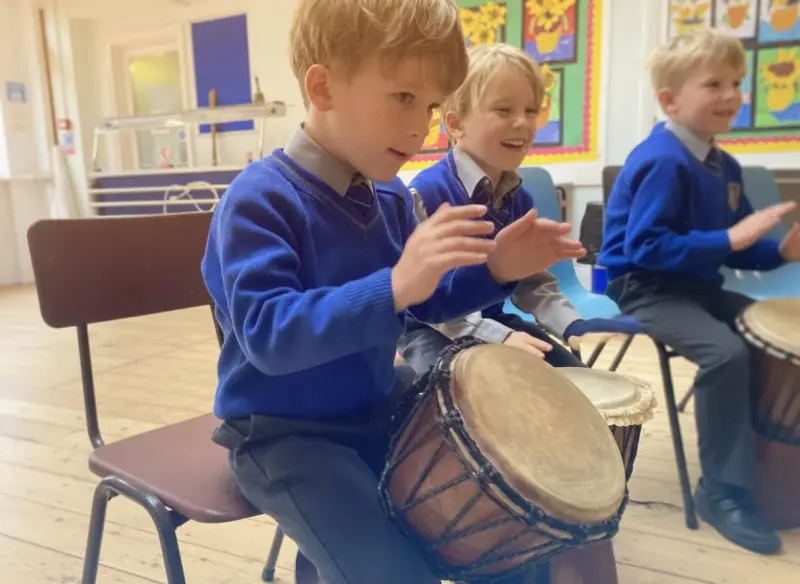 45–60 minutes per classAfrican DrummingThirty pupils, thirty drums, one rhythm.See the session
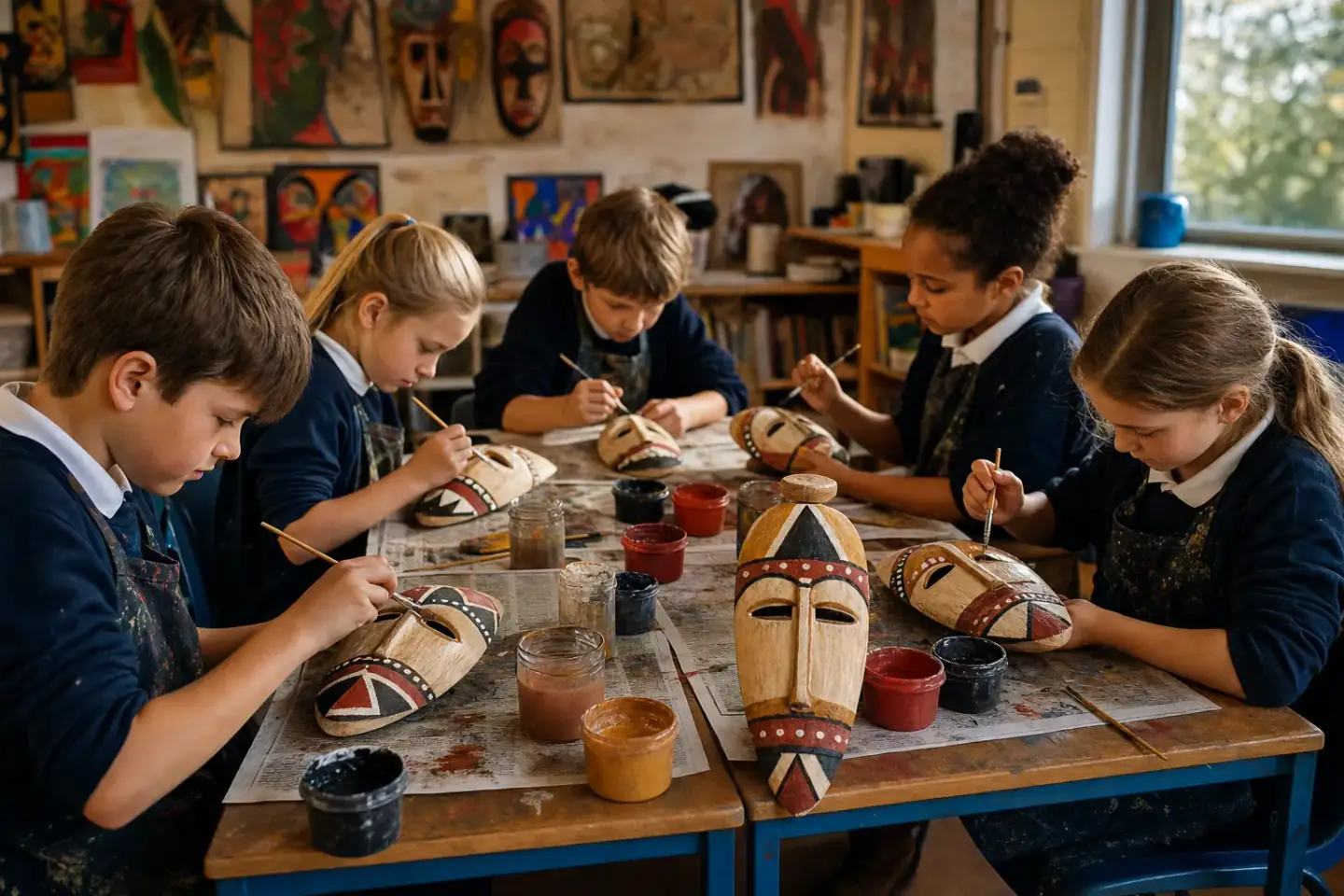 60–90 minutes per classAfrican Mask PaintingCreate African masks with intricate geometric designs.See the session
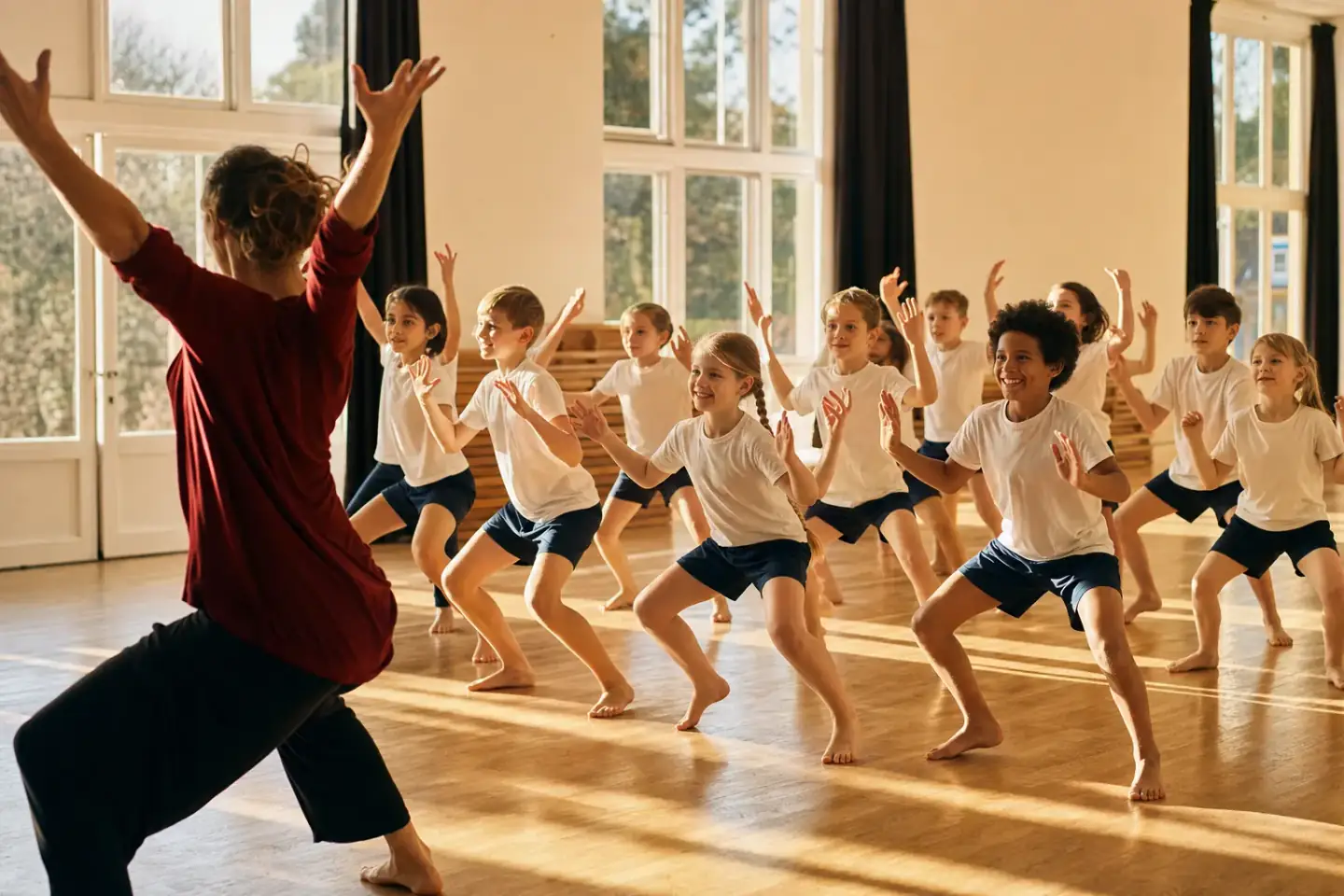 45–60 minutes per classAfrican DanceDiscover African history and culture through authentic dance.See the session
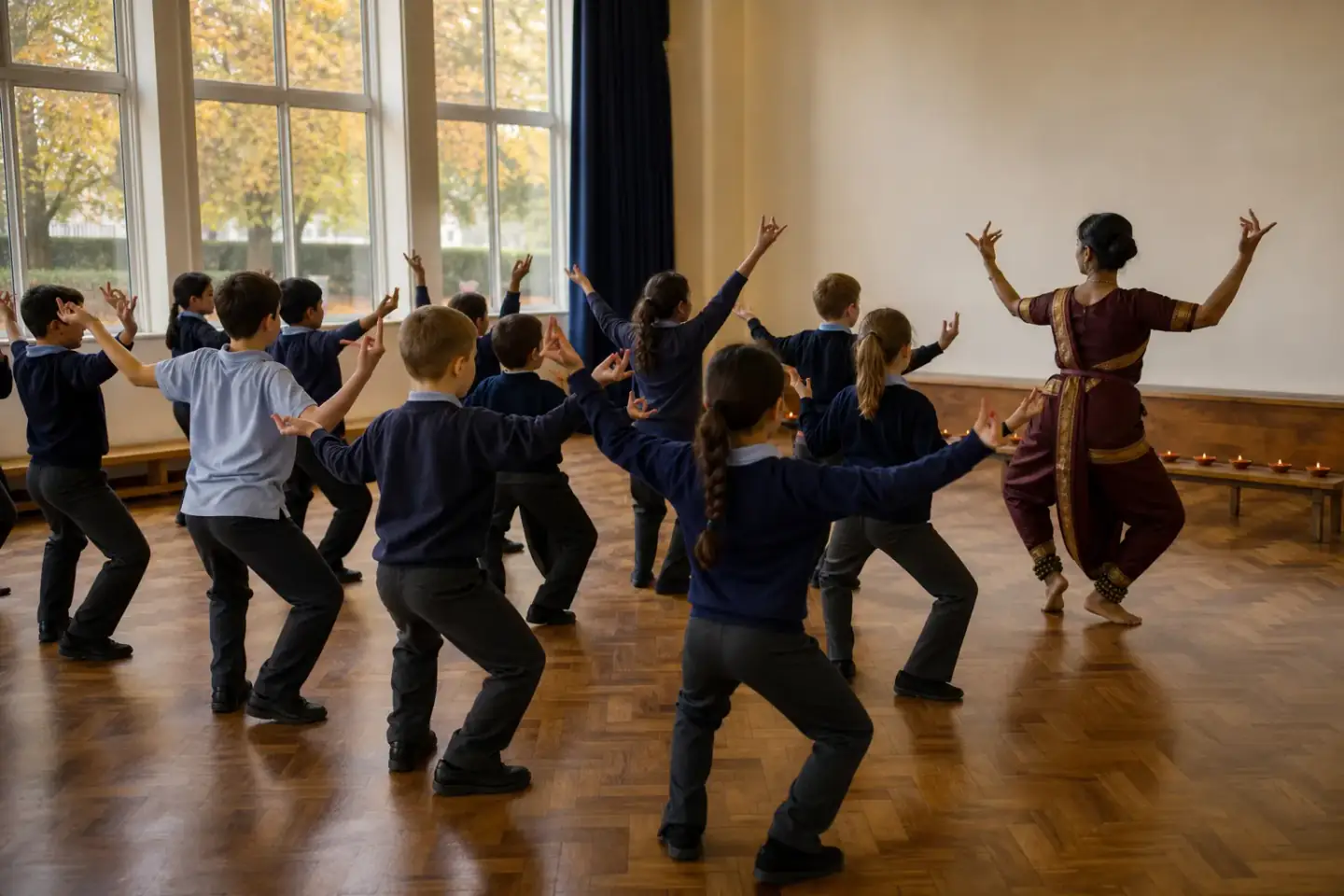 45–60 minutes per classIndian DanceExpress yourself through the graceful moves and rich traditions of Indian dance.See the session
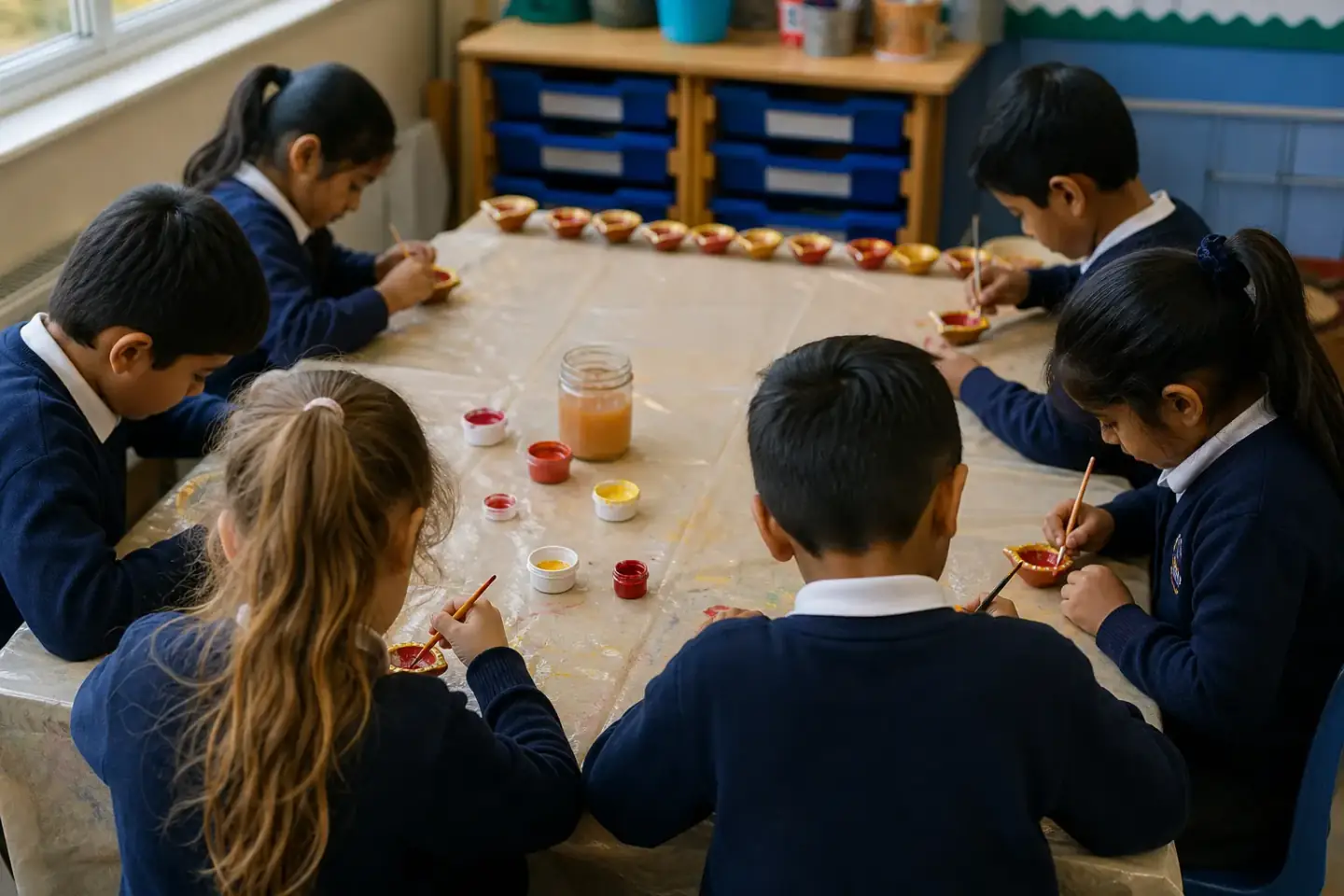 60–90 minutes per classDiya PaintingAdd your personal touch to the festival with a creative diya painting experience.See the session
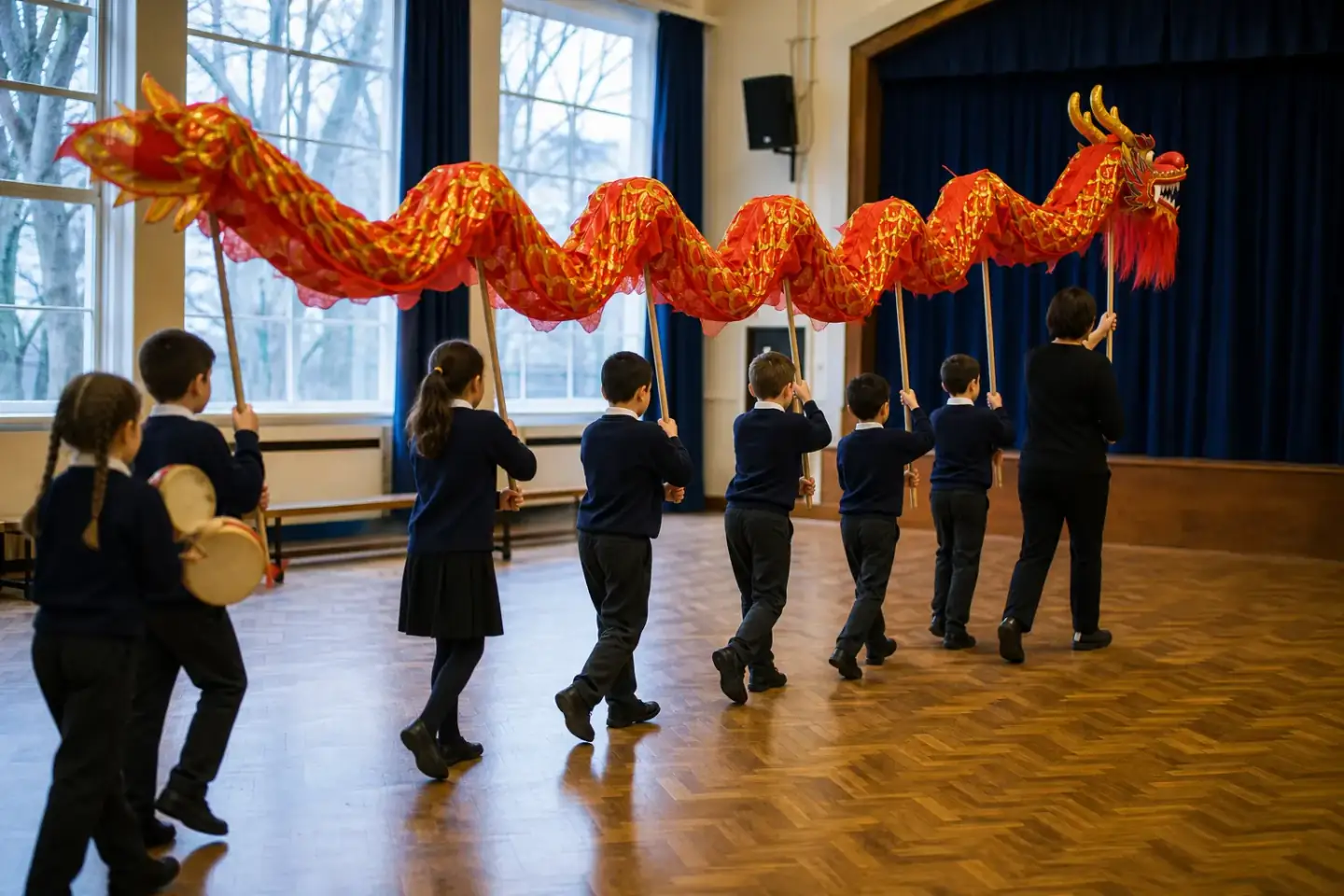 45–60 minutes per classChinese Dragon DanceStep into the vibrant traditions of Chinese culture with our exhilarating Chinese Dragon Dance workshop.See the session
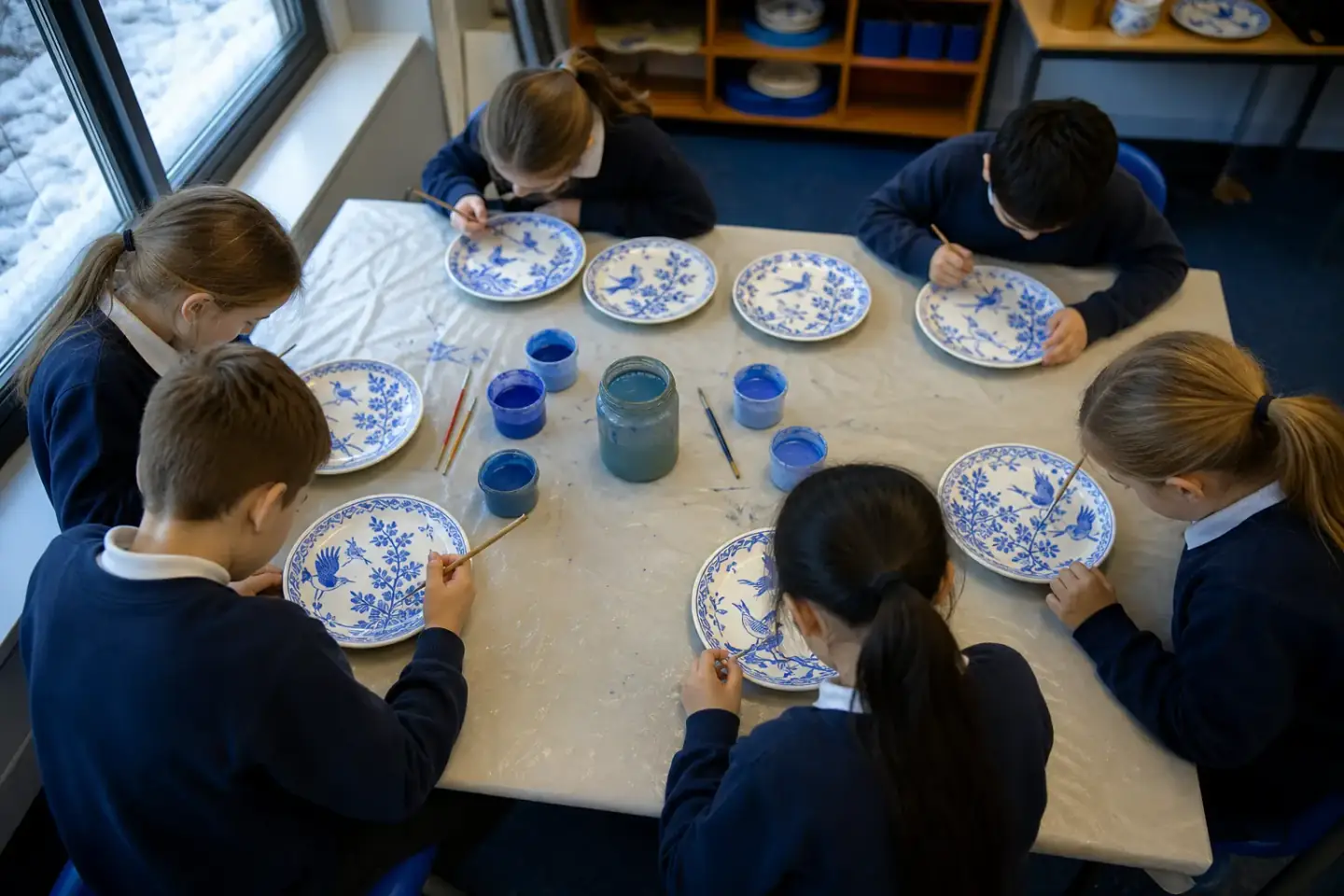 60–90 minutes per classChinese Plate PaintingEach child has the opportunity to create their own unique design.See the session
 60 minutes per classAncient China in VRDiscover the twelve animals of the Zodiac and the story of the Great Race.See the session
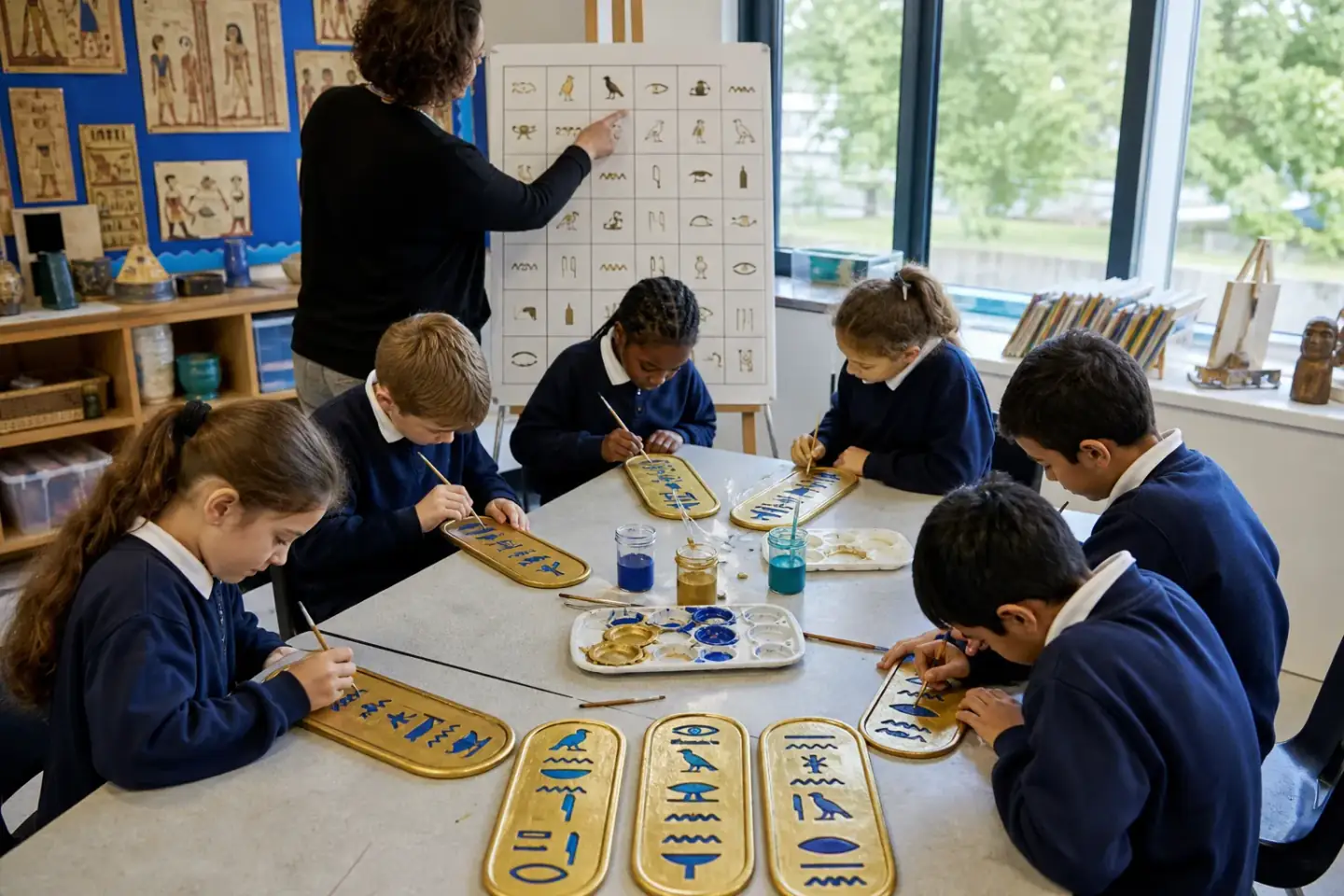 60–90 minutes per classEgyptian Cartouche PaintingHieroglyphic cartouches allow students to write their names like ancient Egyptian royalty.See the session
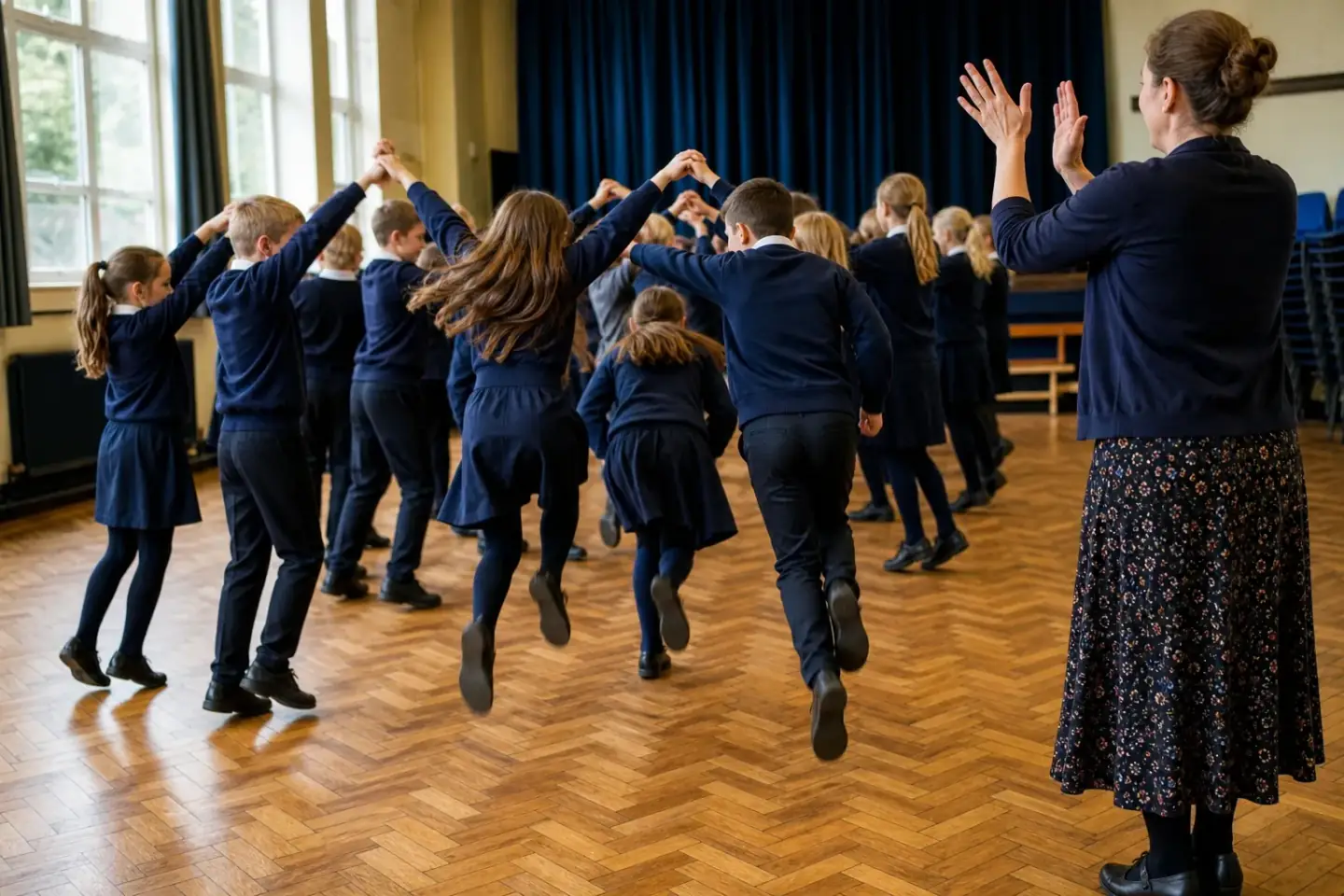 45–60 minutes per classIrish DanceOur Irish dance workshop brings the rhythm, footwork and heritage of Irish dance into your school.See the session
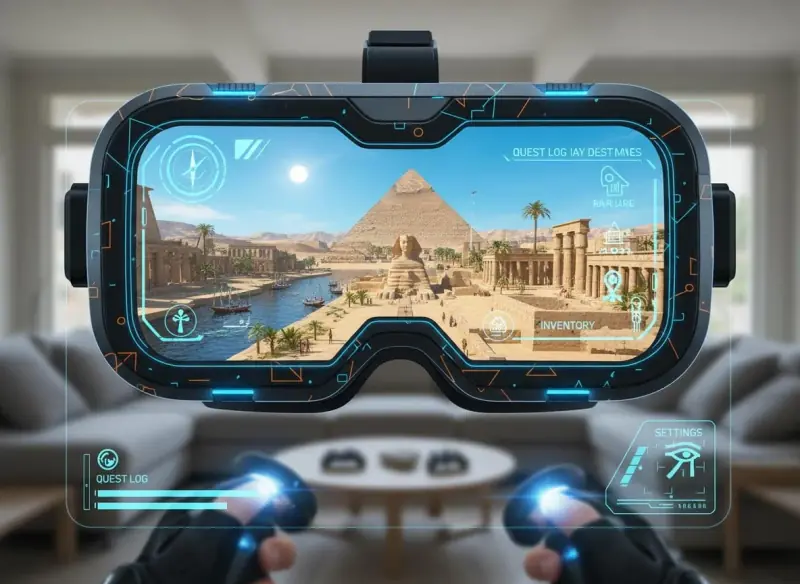 60 minutes per classAncient Egypt in VRCairo and the pyramids, pharaohs and gods, mummification and the Book of the Dead.See the session
 60 minutes per classAncient Greece in VRThe Greek gods and the origins of the Olympics.See the session
 60 minutes per classIndigenous Australia in VRReal dances filmed in Far North Queensland, Australia.See the session
Ribbons, weaving patterns and lively folk music.
Tell us the date you have in mind and we'll come back within one working day with options for your school.