
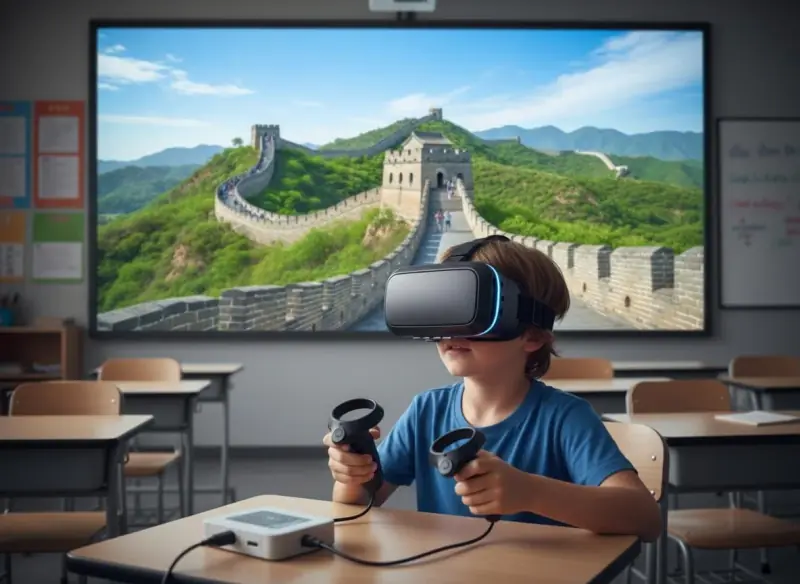
Jan / Feb · Chinese New Year
Ancient China in VR
Discover the twelve animals of the Zodiac and the story of the Great Race.
- Key stages
- KS2
- Session length
- 60 minutes per class
- Group size
- A whole class at once — one headset per pupil, seated
- Formats
- Single class, a year group, or a full day of consecutive classes
How the session runs
Before we begin
Rules first, headsets second
Before the session starts, we show the children how to use the virtual reality headsets. For everyone's safety, all students must stay seated throughout the experience.
Introduction
China today
The facilitator introduces the civilisation — the timeframe, the Shang dynasty, the writing, the wall, the inventions — and then explains how the hour will run: a few questions before each film, and the same questions again afterwards to see what the class picked up. The first film visits China as it is now.
Second film
The twelve animals of the Zodiac
Pupils are asked which Zodiac year we are currently in, then told to watch for their own animal — the one belonging to their birth year — and to keep quiet while they work it out. Afterwards the facilitator goes through all twelve animals in turn with hands up for each, so every pupil in the room finds out which one is theirs. It is the point in the session where the whole class has something personal at stake.
Third film
The story of the Great Race
The class meets the Zodiac animals properly and hears the story of the Great Race. Before it starts, pupils predict which animal wins and which comes last. Afterwards they find out it was the rat, and that cleverness rather than speed is what got it there — plus the moment the kind dragon dropped a log for the struggling rabbit, which is usually the detail the class remembers longest.
Fourth film
Chinese New Year
Hands up first: has anyone here celebrated Chinese New Year, and what traditions are part of it? Between them a class will usually get most of the way there — the dragon and lion dance, firecrackers and fireworks, red decorations, money given in envelopes, the food and the cleaning.
The museum
Four rooms to search
The last module is a virtual museum with four rooms, each holding up to seven panels of images and text with a 3D exhibit in the centre. This is where the class works rather than watches: the facilitator can split them into teams, send each team into a room and set them a different task — their own Zodiac animal with its lucky colours and characteristics, the Terracotta Army, writing and language, other festivals, or five facts about Chinese New Year.
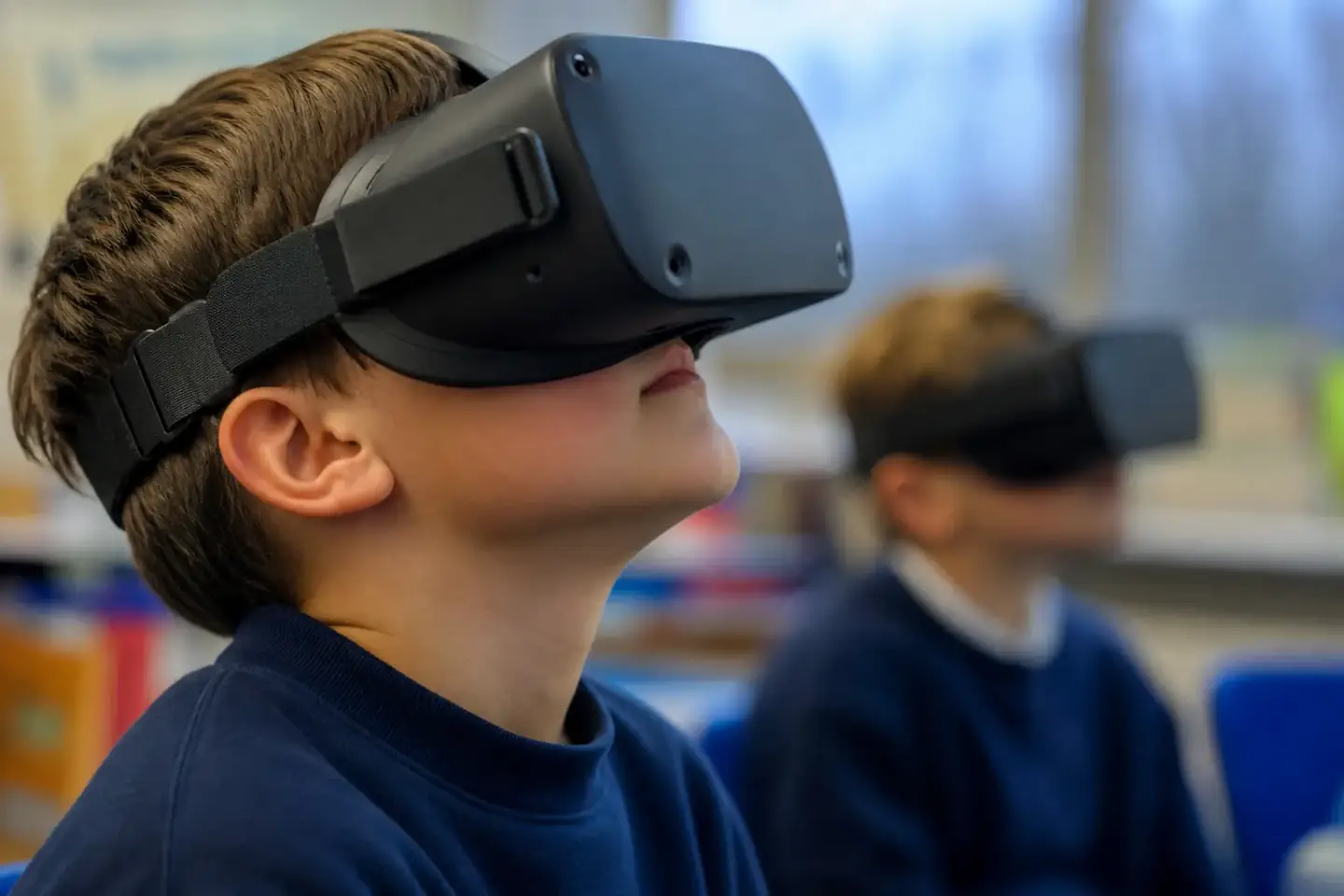
Travel along the Great Wall, to learn about the Silk Road.
What pupils will learn
- That the Ancient Chinese were one of the most successful civilisations, and that many of their discoveries still matter today
- That Ancient China covers a broad timeframe from around four thousand years ago, and that the Shang dynasty made important discoveries in maths and astronomy
- Where silk comes from, that Mandarin is the main language of China today, and roughly how long the Great Wall is
- The twelve animals of the Chinese Zodiac, which year we are in, and which animal belongs to their own birth year
- The story of the Great Race — which animal won, what characteristic got it there, and who helped the rabbit
- The traditions of Chinese New Year: the dragon and lion dance, firecrackers, red decorations, money, food and cleaning — and what the dragon dance is for
- That the festival falls in January or February on a date that moves each year, and that fireworks were invented in China around a thousand years ago
- How to search a source for themselves and report back to the class, working as a team in one of the museum rooms
Curriculum links
KS2
- History, KS1 and KS2
- The achievements of the earliest civilizations, with Ancient China among the named depth study options. Every key learning point in the session is drawn from the KS1 and KS2 history curriculum.
- English, KS1 and KS2
- Spoken language: listen for specific information in a narration, then answer questions on it and explain the answer to the class.
- Geography, KS2
- Locate China and describe what the class has seen of it, comparing the country today with the civilisation that came before.
- Computing and PSHE
- Using digital devices safely and responsibly, and discussing how a simulated place is built and what it leaves out.
What we bring
- A charged headset for every pupil, with wipeable face covers and cleaning wipes used between classes
- A DBS-checked, school-experienced facilitator who runs the whole session from a master device and teaches the history around it
- The full journey: four films and a four-room virtual museum, shown in the order the script follows
- The question sets used before and after each film, so your staff can revisit them the following week
- Set-up, cleaning between classes and pack-down of the whole system, done by us around your timetable
What we need from you
- A hall, studio or cleared classroom where the whole class can sit spaced out, each pupil in front of their own headset and clear of walls and furniture
- Forty minutes before the workshop start time, so the facilitator can park, sign in and set the headsets out
- A mains socket near a spare table, so kit can be laid out and charged between classes
- A class teacher present for the whole session — two adults in the room is part of how we run it
- Confirmation of any pupil who wears glasses — in most cases they stay on under the headset, and the facilitator has the spacer fitted before the class arrives
When to book
Jan / Feb
Chinese New Year follows the lunar calendar and typically falls in late January or February. The zodiac animal changes every year — we'll confirm both when you book.
Reviews for our workshop team
What schools say about our Chinese New Year workshops
“What a great experience for the children! Ivan was amazing at keeping their interest and making the drumming session as active and exciting as possible.”
Demelza Jones “A great workshop. Fantastic resources and Chris was great with the children. They were engaged throughout and talked about it for ages afterwards. This is the third time we have used them and they never disappoint!”
Julie Gill “Fantastic workshops for primary school children - the facilitators Emma for African drumming and Naomi for dance workshops were friendly, skilled and provided a very enjoyable experience for the children. Thank you!”
Aleksandra Dass “We have had a number of experiences from the Education Group and are always impressed by the quality of the workshops. We return to them time after time because we know that the planning, content and age-appropriateness of their sessions are absolutely right for the children.”
Kate Baguley “Our infant school aged pupils enjoyed the Maypole experience and were amazed to see the maypole in the middle of their playground. The teacher was fantastic with our young children and we all managed to come away from our sessions feeling we had learnt something rather wonderful!”
St Peter's “Highly recommend the African mask workshop! It's one of the highlights of the Year 5 calendar. Well worth every penny”
Joanne Netto
Questions schools ask
Does the whole class take part at once?
Yes. There is one headset for every pupil, and the class sits down in front of them together — no rotation, no small groups and nobody waiting for a turn.
Do pupils stay seated?
Throughout. Pupils sit down in front of a headset at the start and stay seated the whole way through, because the films bring the journey to them rather than the other way round. If anything goes wrong a hand goes up and the facilitator comes over.
How does one facilitator keep a whole class in step?
Everything runs from a master device. The sound comes from the facilitator's device rather than the pupils', so the class hears one narration together, and each film begins when everybody looks up for three seconds — which is why the class practises that look-up before a single headset goes on.
What if a pupil does not want to wear a headset?
That is offered to the whole class at the start, before the headsets are handed out, so it never becomes a request a pupil has to make in front of everyone. The facilitator asks the questions out loud and runs the discussion between films, so there is plenty to join in with — and a pupil who has had enough simply hands theirs back.
What is the museum at the end?
A virtual museum with four rooms, each holding up to seven panels of images and text and a 3D exhibit in the middle. The facilitator can split the class into teams, send each into a room and give them a different thing to find — the Terracotta Army, their own Zodiac animal, writing and language, or five facts about Chinese New Year — which turns the last part of the hour into research rather than watching.
How are the headsets kept clean?
They come with wipeable face covers, and the facilitator wipes them down between classes with cleaning wipes suitable for the kit. Pupils who wear glasses can usually keep them on — tell us in advance and the facilitator will have the spacer fitted before the class arrives.
Does the session change if we book it for 21 May rather than Chinese New Year?
The films and the museum are the same. What changes is where the facilitator puts the weight in the discussion: a Chinese New Year booking leans on the festival itself, and a World Day for Cultural Diversity booking leans on Ancient China as the deep history of a living culture, still carried by families in the room.
The other Chinese New Year sessions
All of Chinese New Year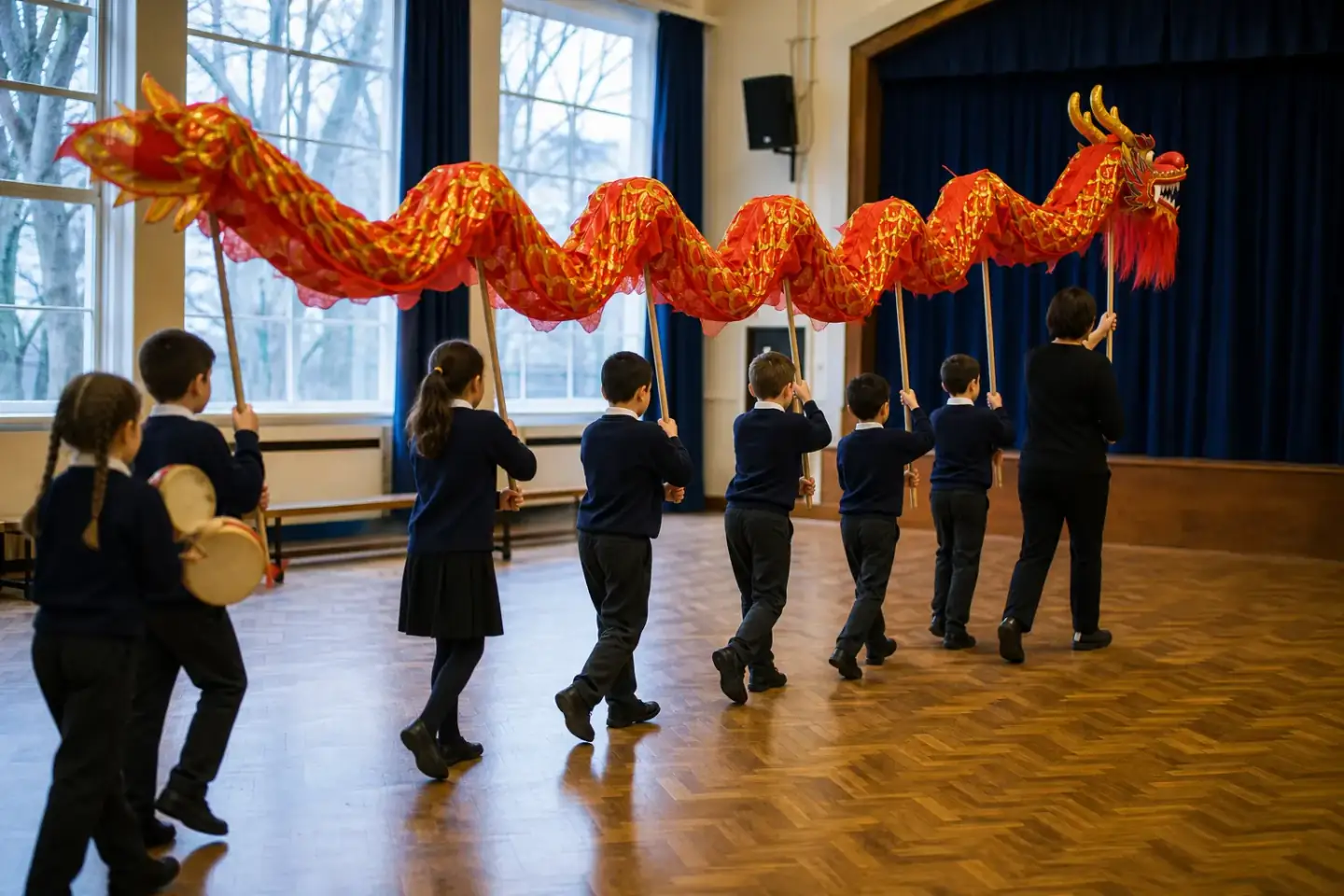
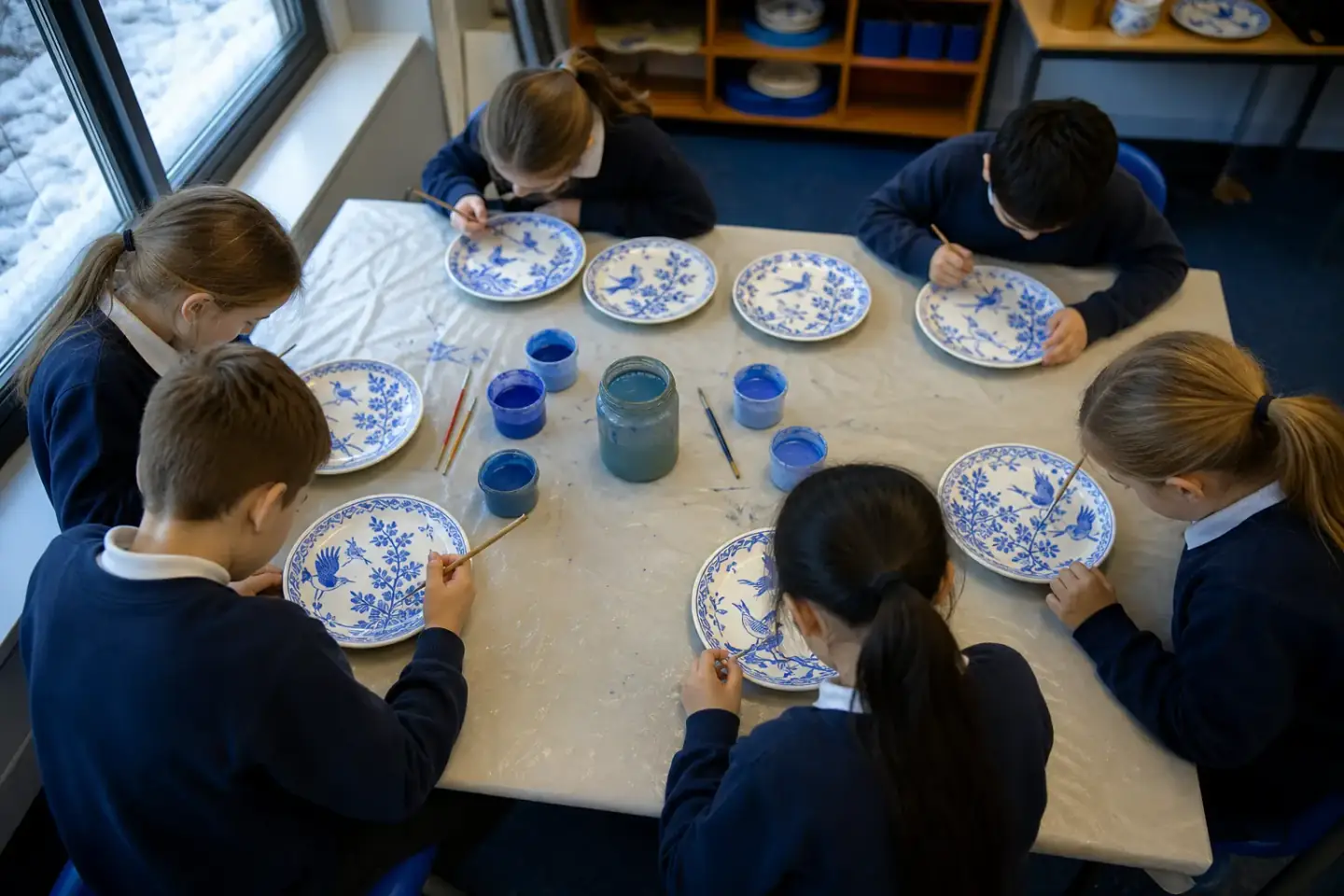
Discover the twelve animals of the Zodiac and the story of the Great Race.
Tell us the date you have in mind and we'll come back within one working day with options for your school.