How to build a cultural diversity day from your own register
21 May never moves, which makes it one of the easiest dates to plan well. Build the day from the languages and faiths already in your register and every activity is about somebody pupils know — for no extra cost.
World Day for Cultural Diversity falls on 21 May and does not move, which makes it one of the easiest things in the cultural calendar to plan properly. The familiar plan writes itself: a passport for every child, a country per classroom, a stamp at each door, food at the end. It is popular because it works and because it is manageable on a normal week. One change lifts it a long way — build the day from your own register, and every activity is about somebody pupils already know.
Start with the school you actually have
Before choosing a single activity, find out what is already in the building. Home languages are recorded on your management system, and so, usually, are the religions logged for RE. Ask the office for both lists and read them properly. Most schools turn out to be more various than anyone expects, and it is rarely the variety the resource packs assume.
Then write two shorter lists: cultures present in the school that the curriculum has not reached yet, and cultures not present that pupils will meet in life and therefore need introducing deliberately. Lean the day on the first list. The difference is audible in the room. One version says here is a country a long way away. The other says this is the language spoken by the grandmother of somebody in Year 4, two streets from here.
Involving parents without putting anyone on the spot
Invitations work best when they go to everyone. Approach one parent because of their surname and, however warmly it is meant, that family becomes the exhibit. Ask the whole school instead, offer several sizes of yes, and make no easy to say — and you will hear from people you would never have thought to ask.
- Send one open invitation to all families rather than targeted asks, and list concrete options: fifteen minutes in a classroom, a recipe, a recorded song or story, an object with its story written on a card, a photograph, or help on the day.
- Include ways to contribute without appearing. A written recipe or a voice recording takes ten minutes at home and lands just as well with a class.
- Ask what people would like to share instead of assigning them a topic. A parent may want to talk about their grandmother's kitchen rather than their country's history.
- Say who the audience is and how long it lasts. One class, fifteen minutes, they are seven years old — that sentence removes most of the nerves.
- Keep a member of staff in the room for the whole session. A visiting parent is a guest, not cover.
- Write back afterwards to say what the class did with it. That is what gets you volunteers the following year.
Run it as a carousel
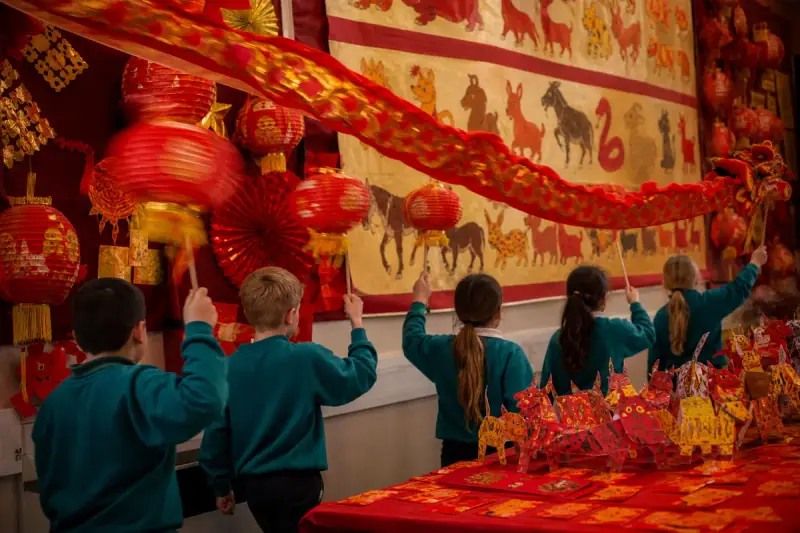
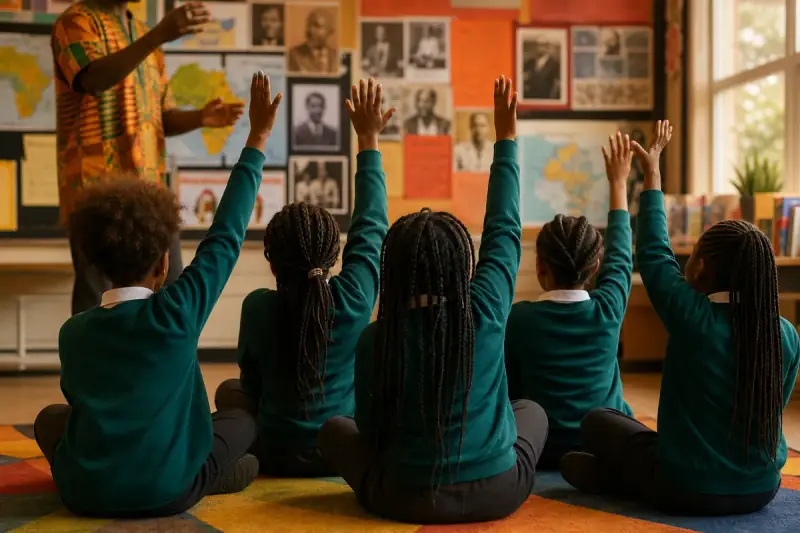
A carousel — every class doing something different at the same time, in blocks of the same length — pitches the day right for every year group, gets far more into it, and gives you something to share at the end. One activity for the whole school always ends up aimed at the middle. In a primary the simplest version of the carousel is usually the best one: fix each class to a single activity for a long block, then bring everybody together so classes teach each other what they did.
Practically: forty-five to fifty minute blocks with a real changeover, everything running at once so the hall is not a bottleneck, and one adult per station who knows the material well enough to talk about it. Open with an assembly that says what the day is — a United Nations day about difference being ordinary — and close with the sharing, which is what joins thirty separate activities into one day pupils can describe.
Decide the written outcome for each class before the day: a paragraph, a labelled map, a recipe card for a class book, a recording. One line per class in the plan, and the day keeps paying off in the week after it.
Objects rather than outfits
The costume question is the one decision worth thinking about twice. A national dress parade sounds inclusive, and in practice it divides a school: children whose families own traditional clothing wear it, children whose families do not arrive in a football shirt. There is an easy way round it.
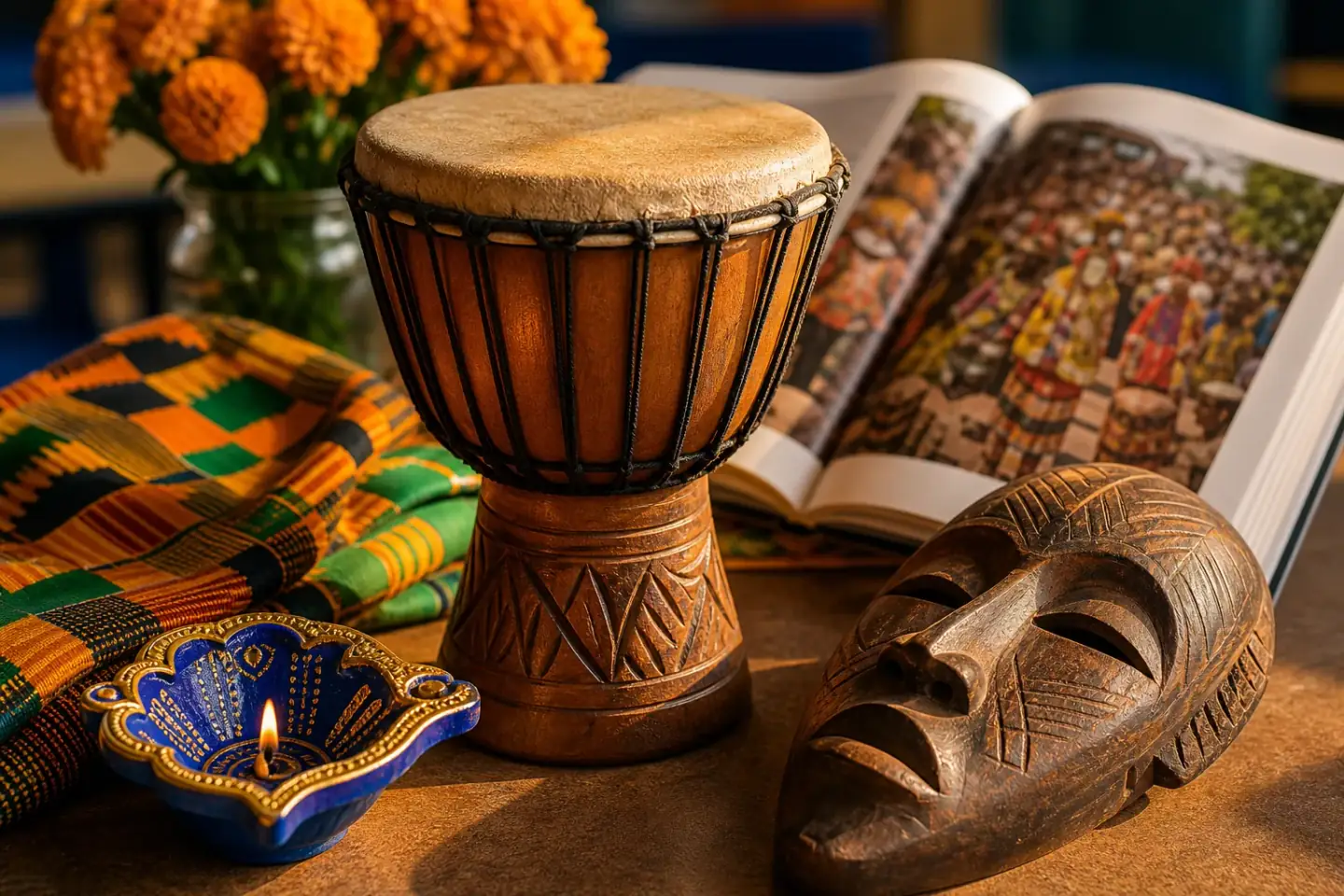
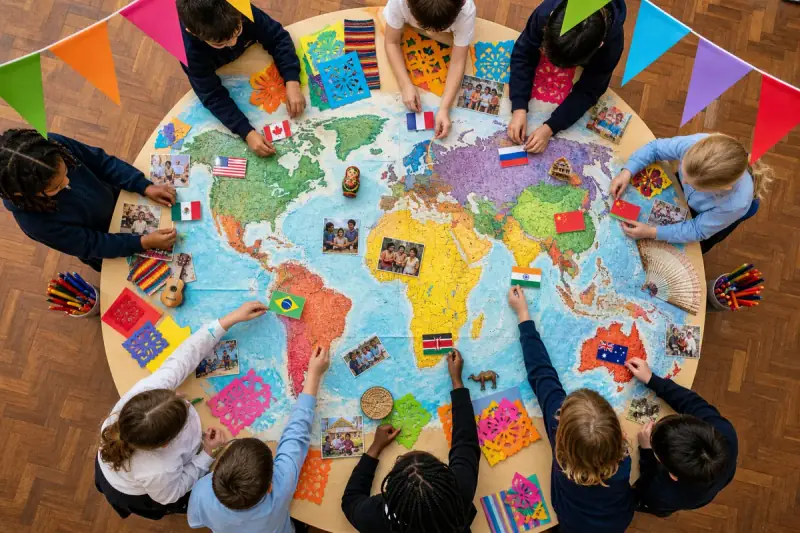
Clothing brought in and explained by the family it belongs to teaches a great deal. Clothing handed out of a box as an outfit teaches less, and the same goes for accents, face paint and anything sold with the word tribal on the label. If you want the day to look like something, do it with objects, food, writing systems, instruments, music and maps — all of which pupils can handle, ask about and write about afterwards.
The test is simple: would the day make a family in your school feel seen, or looked at?
Keep the ambition proportionate, too. Four classes doing something real with material from four families in the school is worth more than a tour of the continents, and it is less work. Where you want more depth than a resource pack can give, we bring a facilitator, the kit and the curriculum links for your key stages, with follow-up resources for the week afterwards — so the day is built from your school, and you are not building all of it yourself.