
21 May · Cultural Diversity
Chinese Dragon Dance
Step into the vibrant traditions of Chinese culture with our exhilarating Chinese Dragon Dance workshop.
- Key stages
- EYFS to KS2
- Session length
- 45–60 minutes per class
- Group size
- Up to 60 pupils in a hall, working in rotation
- Formats
- Assembly, class sessions or a full day ending in a parade
How the session runs
Introduction
What the Spring Festival is
The class is welcomed to quiet music and the facilitator introduces Chinese New Year and the four traditions the session draws on. A prepared display carries the Chinese flag, the lion and dragon heads, a fan and a parasol, and each prop is demonstrated as the dances are explained, so pupils know what they are about to handle and what it means.
Warm-up
Into the music
A different piece of Chinese music from the main routine, and gentle mobilisation and stretches to raise the heart rate. Animal movements from the Great Race story come in here — bouncing like a rabbit, arms stretched wide like dragon wings — along with the reminders the rest of the hour depends on: safe spacing, careful listening, awareness of everyone else.
Dance routine
The routine for their age group
The main body of the session, and the routine is chosen to fit the class: the Peacock Dance with fans for EYFS and KS1, the Lion Dance for lower KS2, the Martial Arts Fan Dance for upper KS2. It is broken into small sections and taught one movement at a time, with the meaning behind each movement explained and sections repeated as often as the class needs.
Dragon Parade
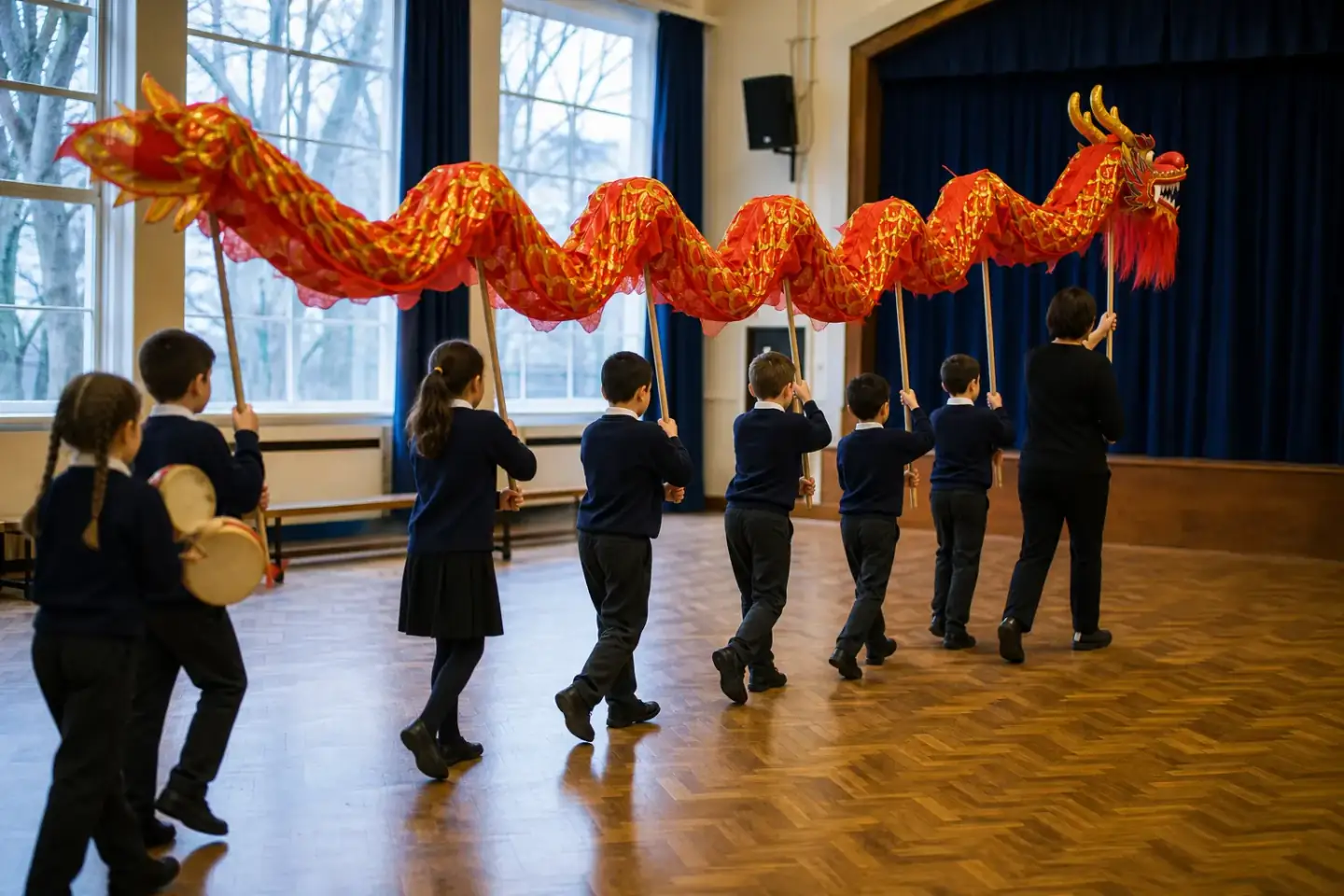
Take the dragon round the space
The class splits in two so one group performs while the other watches, then they swap. One pupil wears the dragon head while the others move beneath the long tail, a pupil can lead with a parasol, another can wear the lion head and join the procession, and everybody not under the dragon carries and twirls a parasol.
Reflection
What they learned
Pupils recall something they have learned about Chinese New Year or a piece of dance vocabulary, and share one thing they enjoyed, one new piece of knowledge and one movement they can now do.
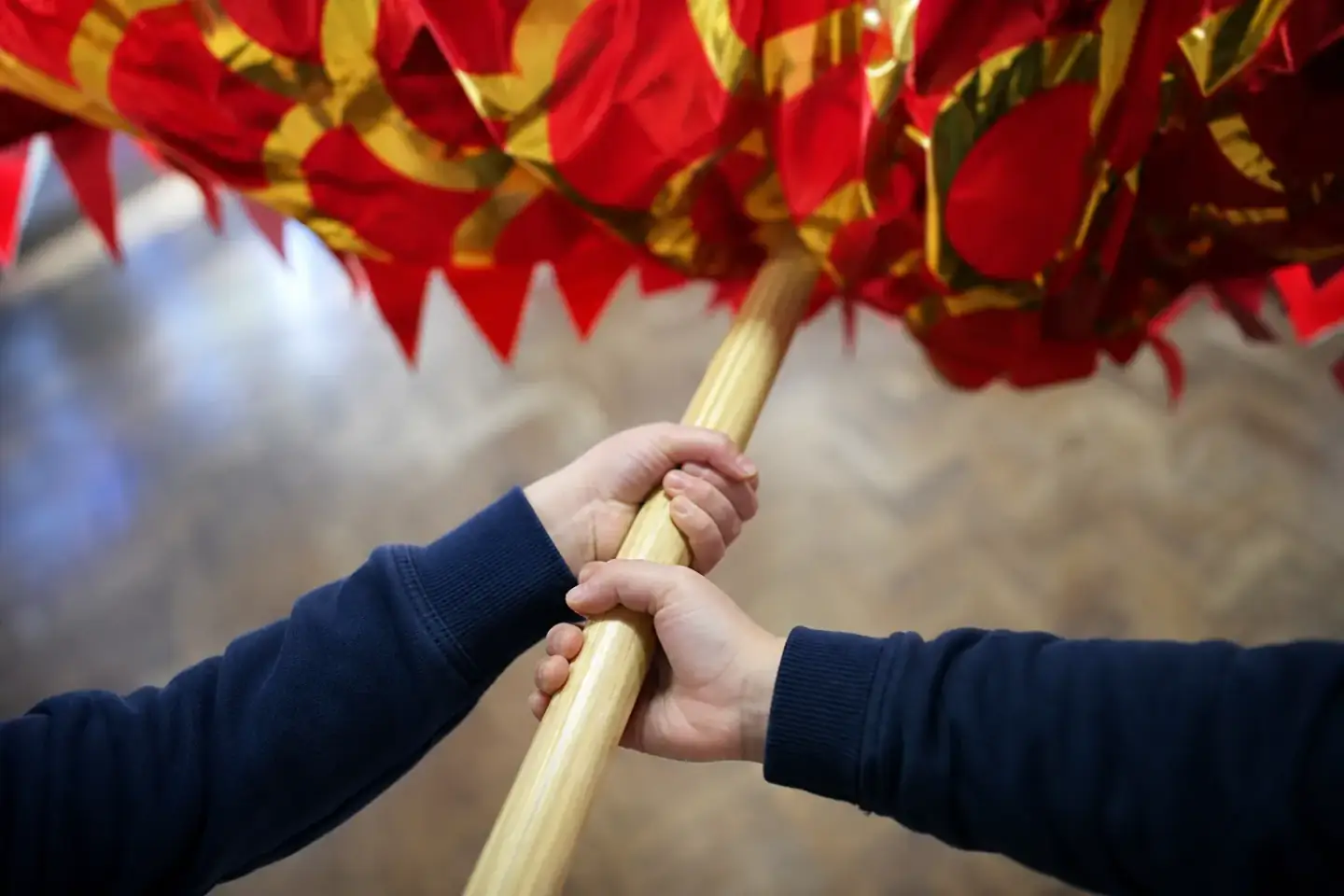
A dragon is not thirty separate pupils, it is one animal.
What pupils will learn
- What Chinese New Year is, why it is also called the Spring Festival, and what it marks
- Four Chinese dance traditions by name: Peacock Dance, Lion Dance, Martial Arts Fan Dance and Dragon Parade
- The vocabulary the session uses — parasol, fan dance, lion dance, dragon parade, martial arts — learned while dancing rather than written down
- The cultural meaning behind the movements, explained as each one is taught
- How to handle fans, parasols and the lion and dragon heads safely and well as props within a dance
- How a dragon parade works as a group: one head, a long tail, and a whole class moving as a single animal without running into itself
- Rhythm, coordination and listening: matching movement to Chinese music and to everyone else in the room
- Confidence in performing, and the safe spacing and awareness of others that a prop-led dance depends on
Curriculum links
EYFS to KS2
- PE and Dance, KS1
- Perform dances using simple movement patterns; develop balance, agility and coordination.
- PE and Dance, KS2
- Perform dances using a range of movement patterns; compare performances to achieve a personal best.
- Music, KS2
- Listen with attention to music from another tradition, and match movement to its rhythm and phrasing.
- RE and PSHE
- Festivals and living cultural practice: why a community marks the turn of the year, what the dances mean to the people who perform them, and why the props are handled the way practitioners handle them rather than borrowed as a costume.
What we bring
- A dragon head and long dragon tail, a lion head, fans and parasols for the class
- A display for the introduction, including the Chinese flag, the lion and dragon heads, a fan and a parasol
- The music for the whole session, chosen from our Chinese workshop resources
- A facilitator who performs these dances, in Chinese-style dress, DBS-checked and used to working in schools
What we need from you
- A hall or cleared space with clear height overhead — low light fittings, beams and hanging displays are the usual obstacle, so tell us about them in advance
- A floor clear of stacked chairs and trolleys along the walls, because the dragon tail travels wider than pupils expect
- Pupils in PE kit with plimsolls or trainers, so the footwork is safe on a hall floor
- The class teacher in the room for the whole session, as safeguarding requires
- Twenty minutes before the first class to set out the display and the props, plus an agreed route if the day ends outside the hall
When to book
21 May
World Day for Cultural Diversity for Dialogue and Development is a fixed date: 21 May every year.
Reviews for our workshop team
What schools say about our Cultural Diversity workshops
“What a great experience for the children! Ivan was amazing at keeping their interest and making the drumming session as active and exciting as possible.”
Demelza Jones “A great workshop. Fantastic resources and Chris was great with the children. They were engaged throughout and talked about it for ages afterwards. This is the third time we have used them and they never disappoint!”
Julie Gill “Fantastic workshops for primary school children - the facilitators Emma for African drumming and Naomi for dance workshops were friendly, skilled and provided a very enjoyable experience for the children. Thank you!”
Aleksandra Dass “We have had a number of experiences from the Education Group and are always impressed by the quality of the workshops. We return to them time after time because we know that the planning, content and age-appropriateness of their sessions are absolutely right for the children.”
Kate Baguley “Our infant school aged pupils enjoyed the Maypole experience and were amazed to see the maypole in the middle of their playground. The teacher was fantastic with our young children and we all managed to come away from our sessions feeling we had learnt something rather wonderful!”
St Peter's “Highly recommend the African mask workshop! It's one of the highlights of the Year 5 calendar. Well worth every penny”
Joanne Netto
Questions schools ask
How many pupils take part in the dragon parade?
The class splits in two, so one group parades while the other watches, then they swap. One pupil wears the dragon head, others move beneath the tail, and everybody else leads with a parasol or wears the lion head — so nobody is standing out.
Do pupils wear costumes?
No. Pupils stay in their own PE kit and carry the dragon — nobody is dressed up as a person from another culture. The dragon itself is the costume, and it is handled the way a troupe handles it.
Does every pupil get a turn under the dragon?
Yes. The group is halved and the two halves swap over, so every pupil has a turn in the parade and a turn watching it. With sixty pupils in a hall we run the swap in smaller waves so nobody is standing and watching for long.
Will it work with our youngest classes?
It does — the routine is chosen for the age group. EYFS and KS1 learn the Peacock Dance with fans, lower KS2 the Lion Dance and upper KS2 the Martial Arts Fan Dance, and the movements and language are simplified for younger children and for pupils with additional needs. Tell us about the group in advance and the facilitator plans it in.
Does the session change depending on whether we book it for Chinese New Year or for 21 May?
The routines and the parade are the same. For a Chinese New Year booking the facilitator spends longer on the festival itself. For World Day for Cultural Diversity the weight shifts to the dances as living practice — what each one means, who performs them, and how a whole class turns itself into one moving animal.
Can the day finish with an assembly?
Yes. We pick realistic sections of the dances for pupils to perform, explain each one briefly to the audience, and usually finish with the Dragon Parade. On a full-day booking the dragon can leave the hall on a route agreed with you in advance, with the other classes lining it.
The other Cultural Diversity sessions
All of Cultural Diversity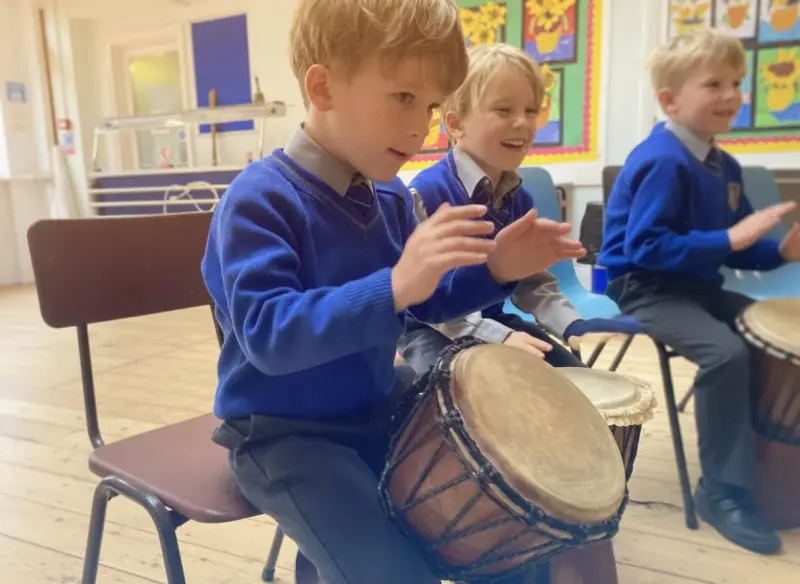 45–60 minutes per classAfrican DrummingThirty pupils, thirty drums, one rhythm.See the session
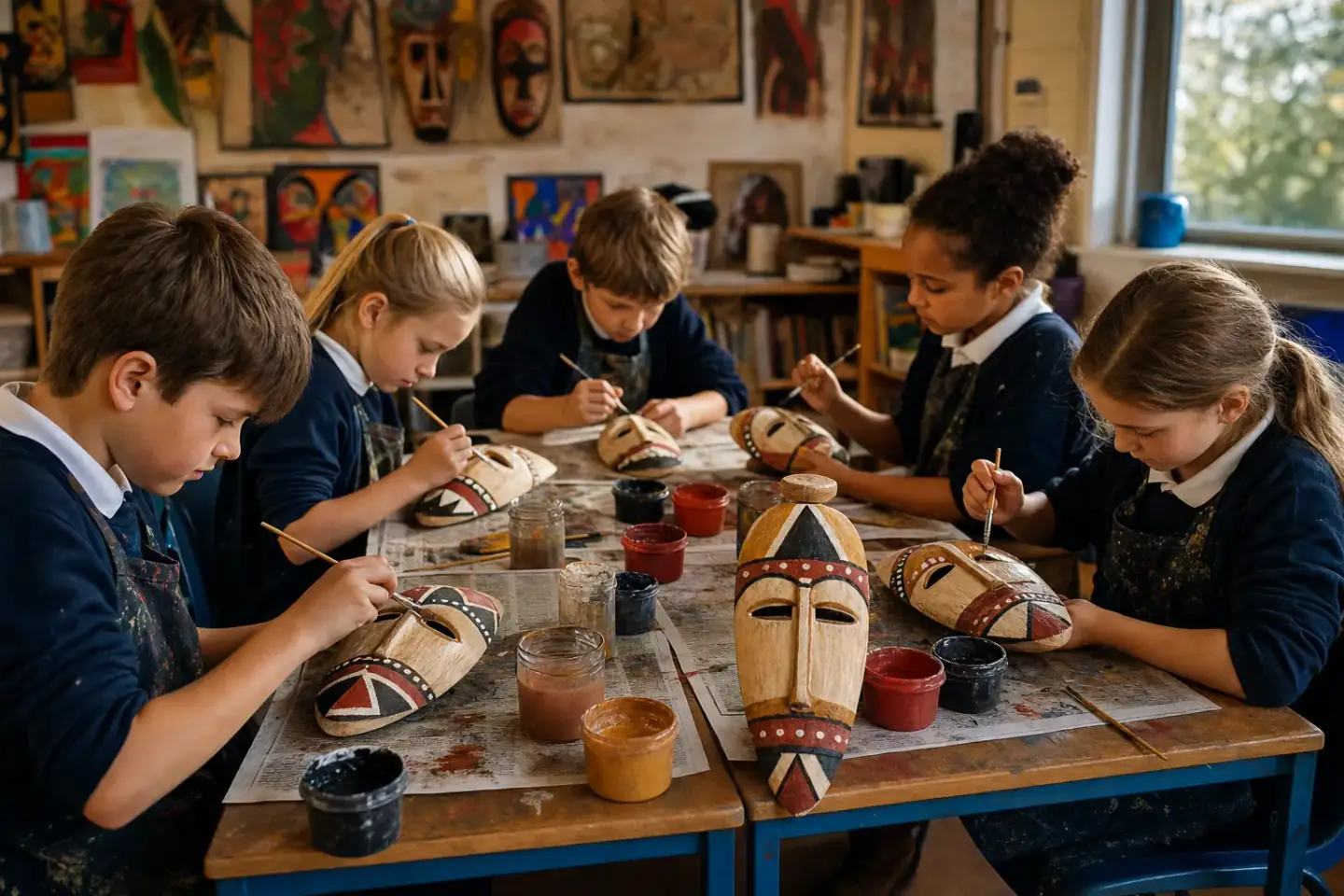 60–90 minutes per classAfrican Mask PaintingCreate African masks with intricate geometric designs.See the session
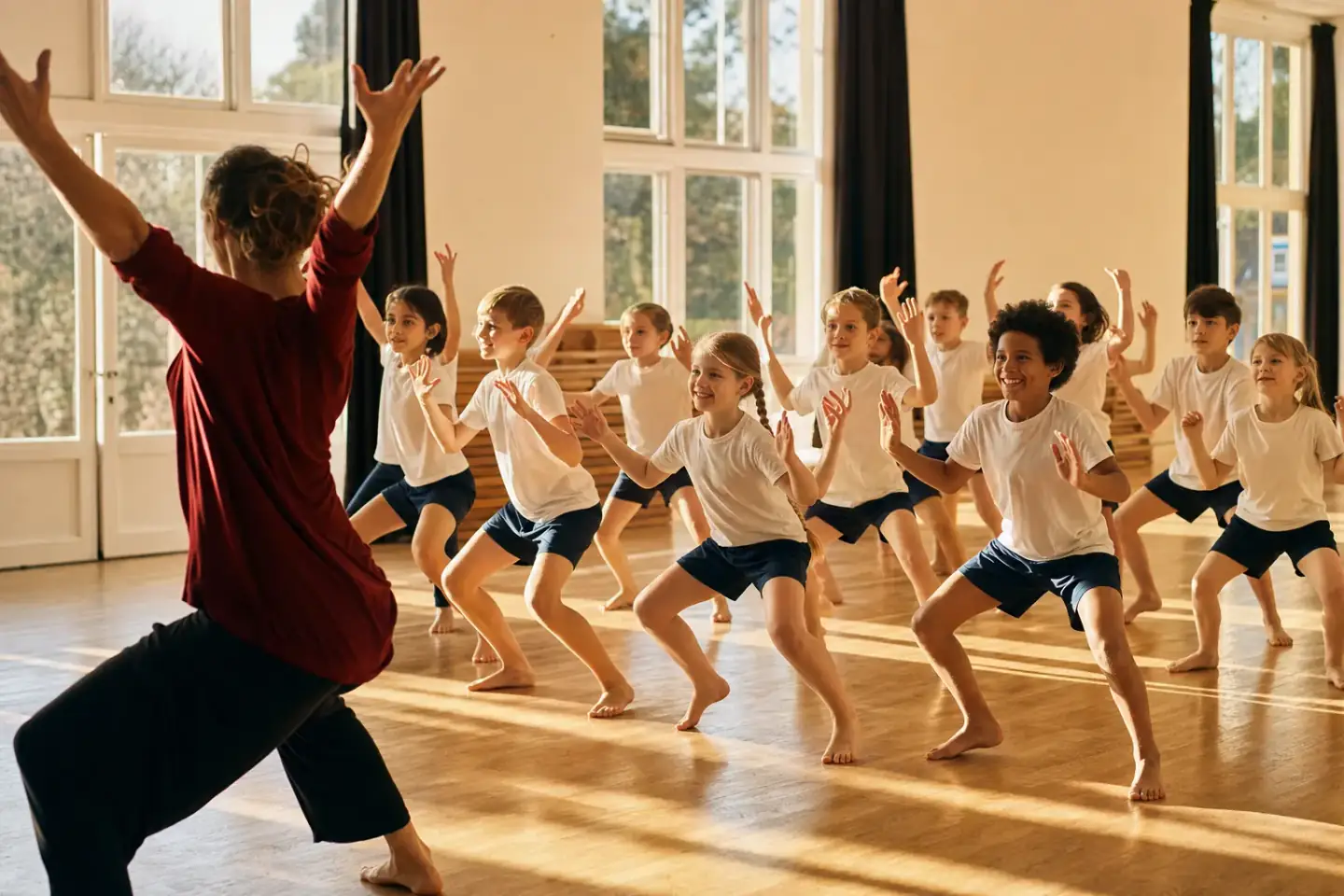 45–60 minutes per classAfrican DanceDiscover African history and culture through authentic dance.See the session
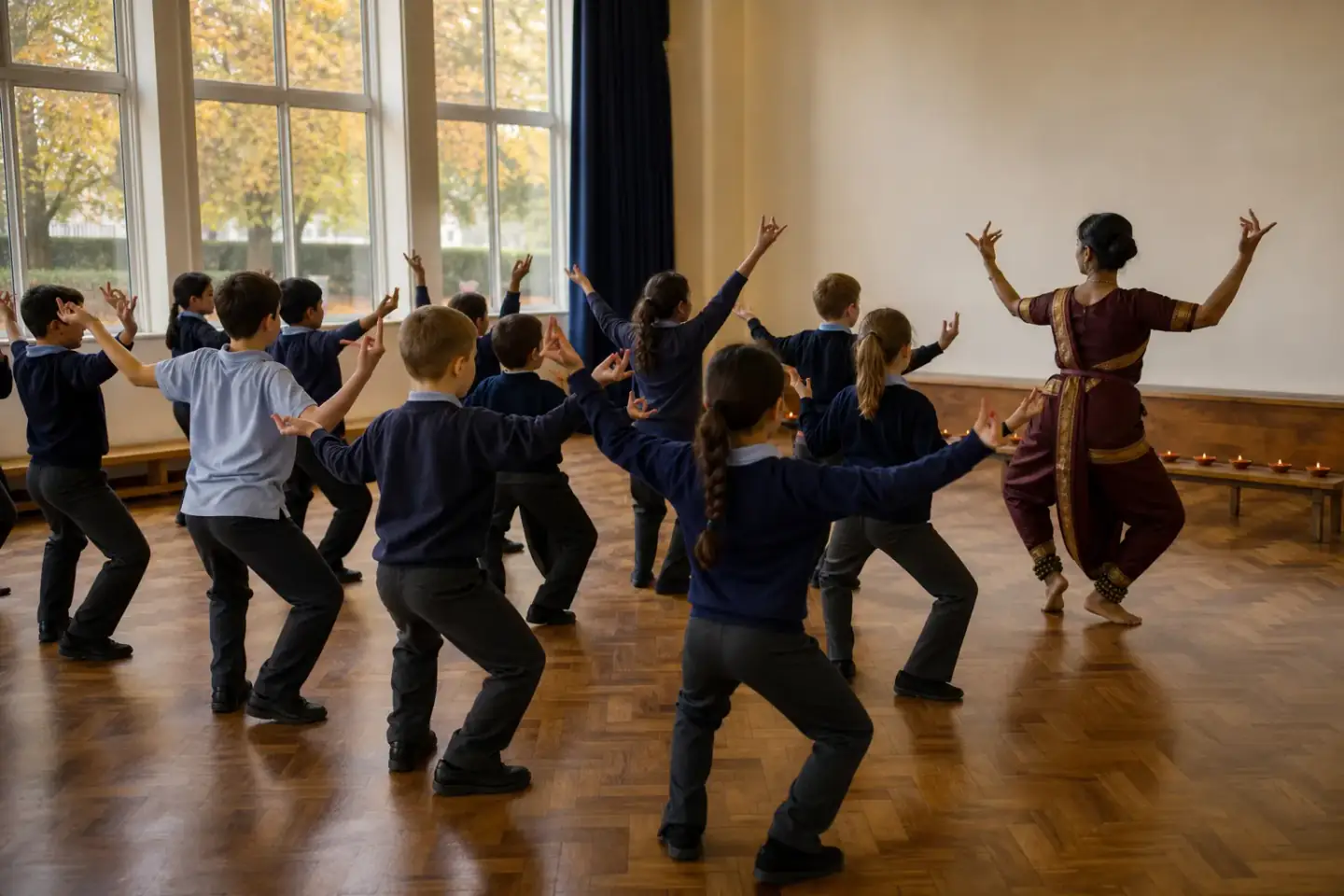 45–60 minutes per classIndian DanceExpress yourself through the graceful moves and rich traditions of Indian dance.See the session
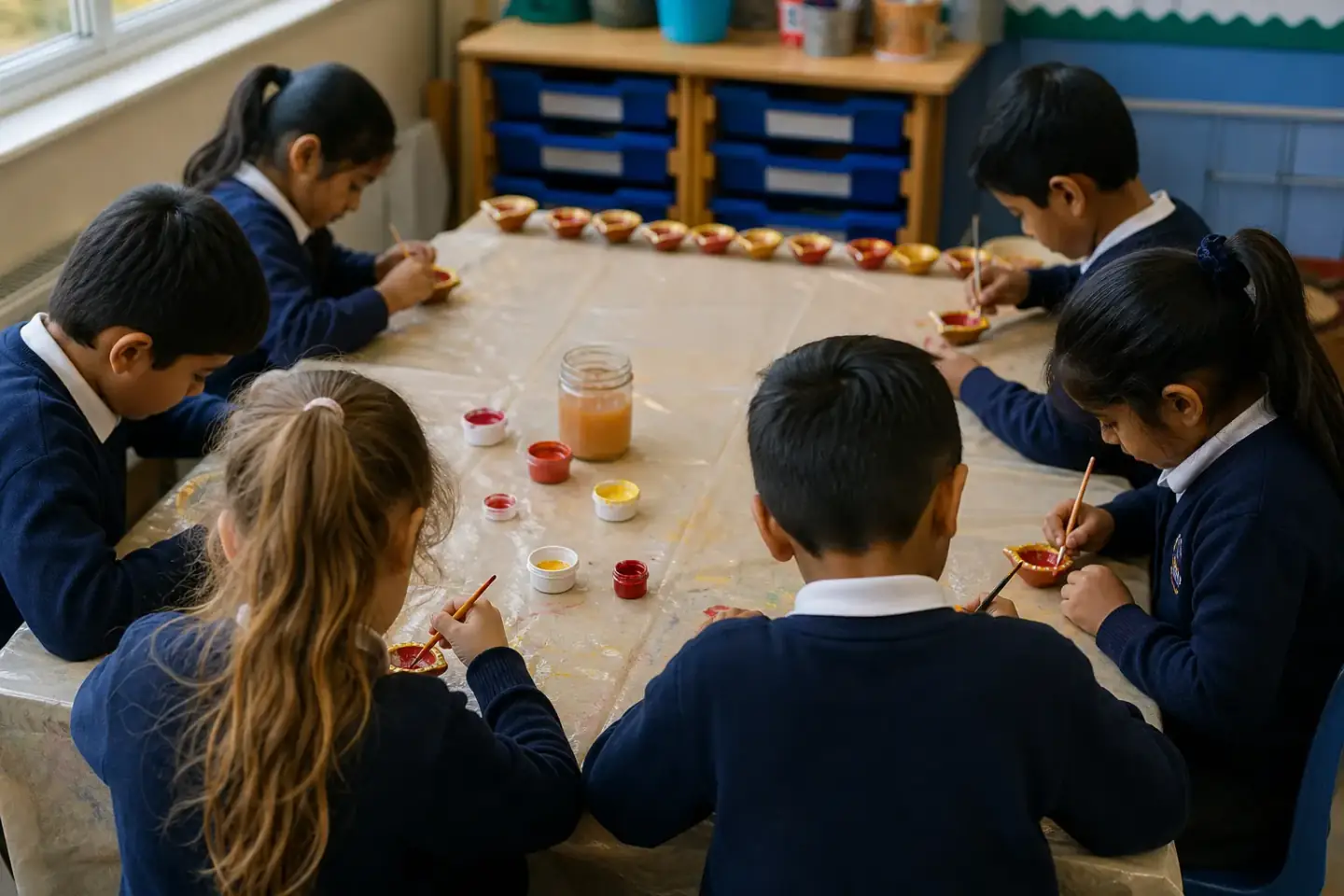 60–90 minutes per classDiya PaintingAdd your personal touch to the festival with a creative diya painting experience.See the session
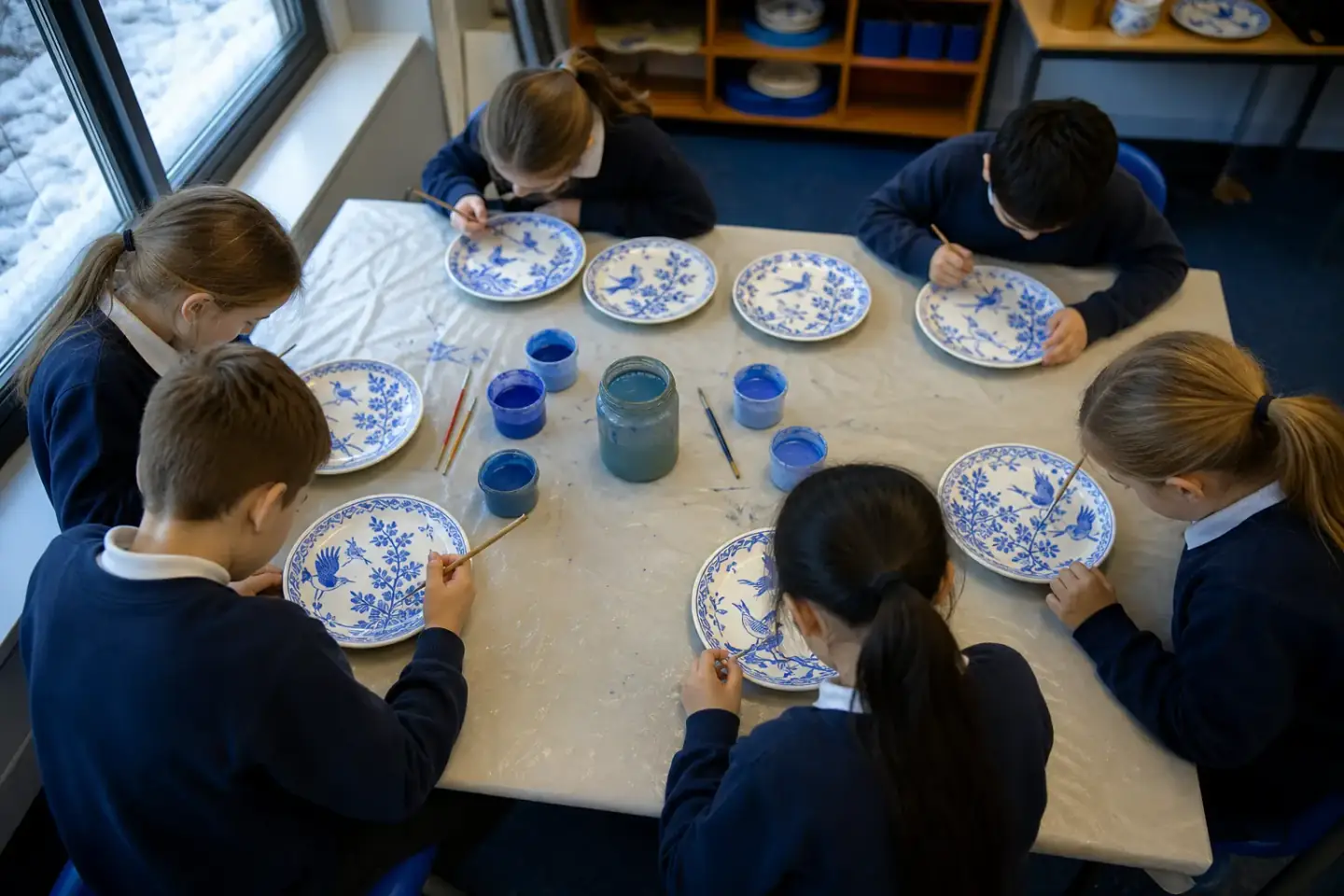 60–90 minutes per classChinese Plate PaintingEach child has the opportunity to create their own unique design.See the session
 60 minutes per classAncient China in VRDiscover the twelve animals of the Zodiac and the story of the Great Race.See the session
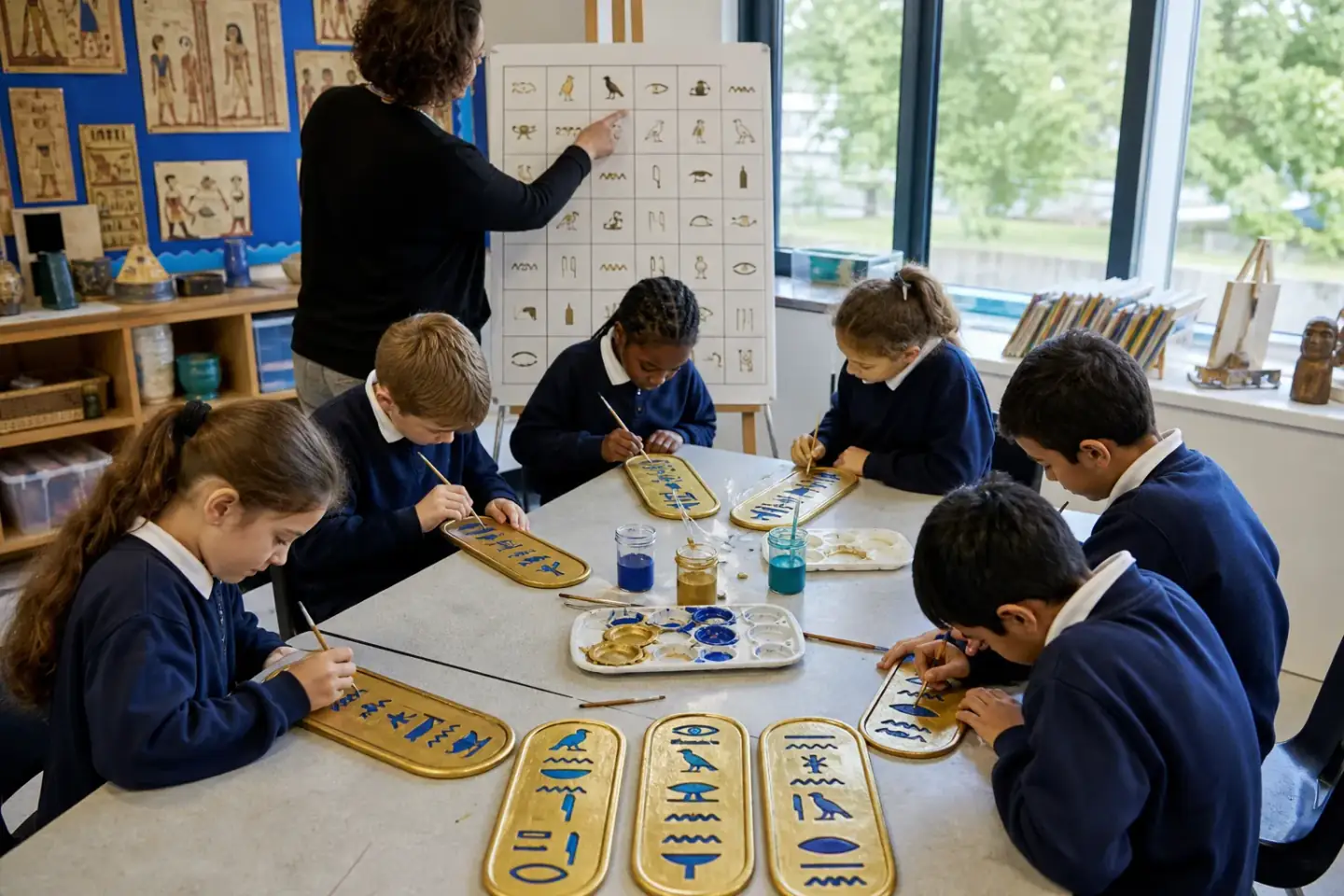 60–90 minutes per classEgyptian Cartouche PaintingHieroglyphic cartouches allow students to write their names like ancient Egyptian royalty.See the session
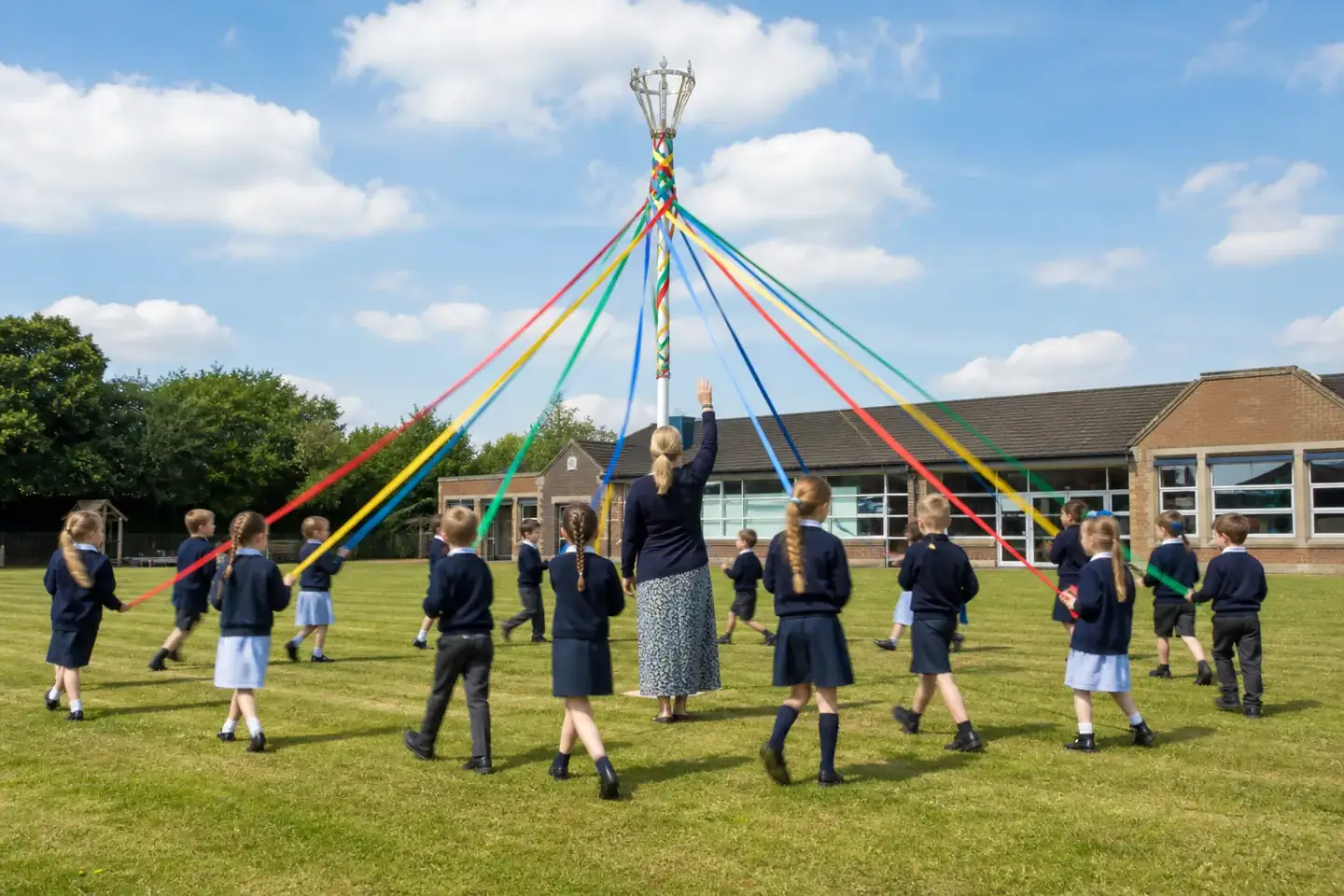 45–60 minutes per classMaypole DanceRibbons, weaving patterns and lively folk music.See the session
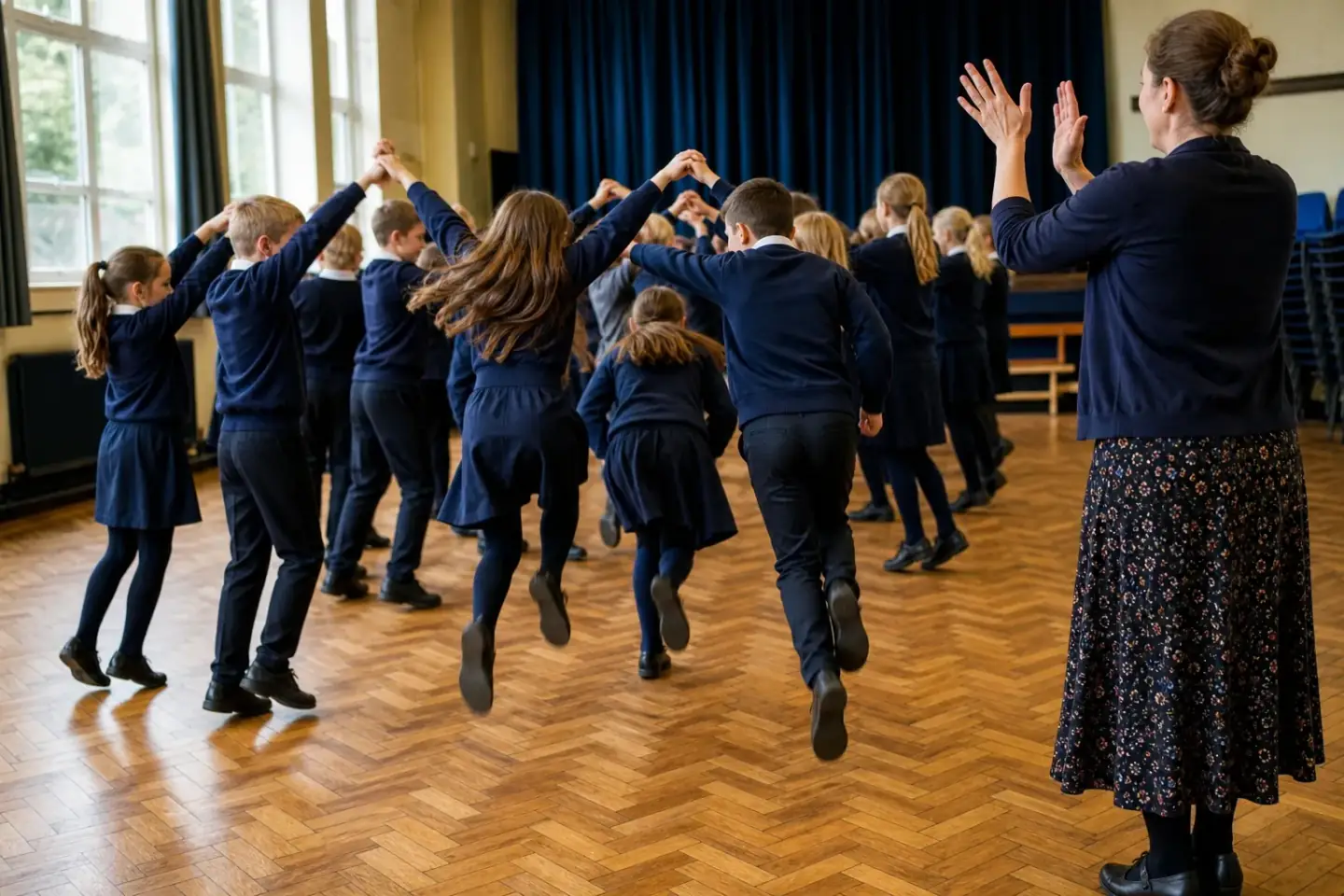 45–60 minutes per classIrish DanceOur Irish dance workshop brings the rhythm, footwork and heritage of Irish dance into your school.See the session
 60 minutes per classAncient Egypt in VRCairo and the pyramids, pharaohs and gods, mummification and the Book of the Dead.See the session
 60 minutes per classAncient Greece in VRThe Greek gods and the origins of the Olympics.See the session
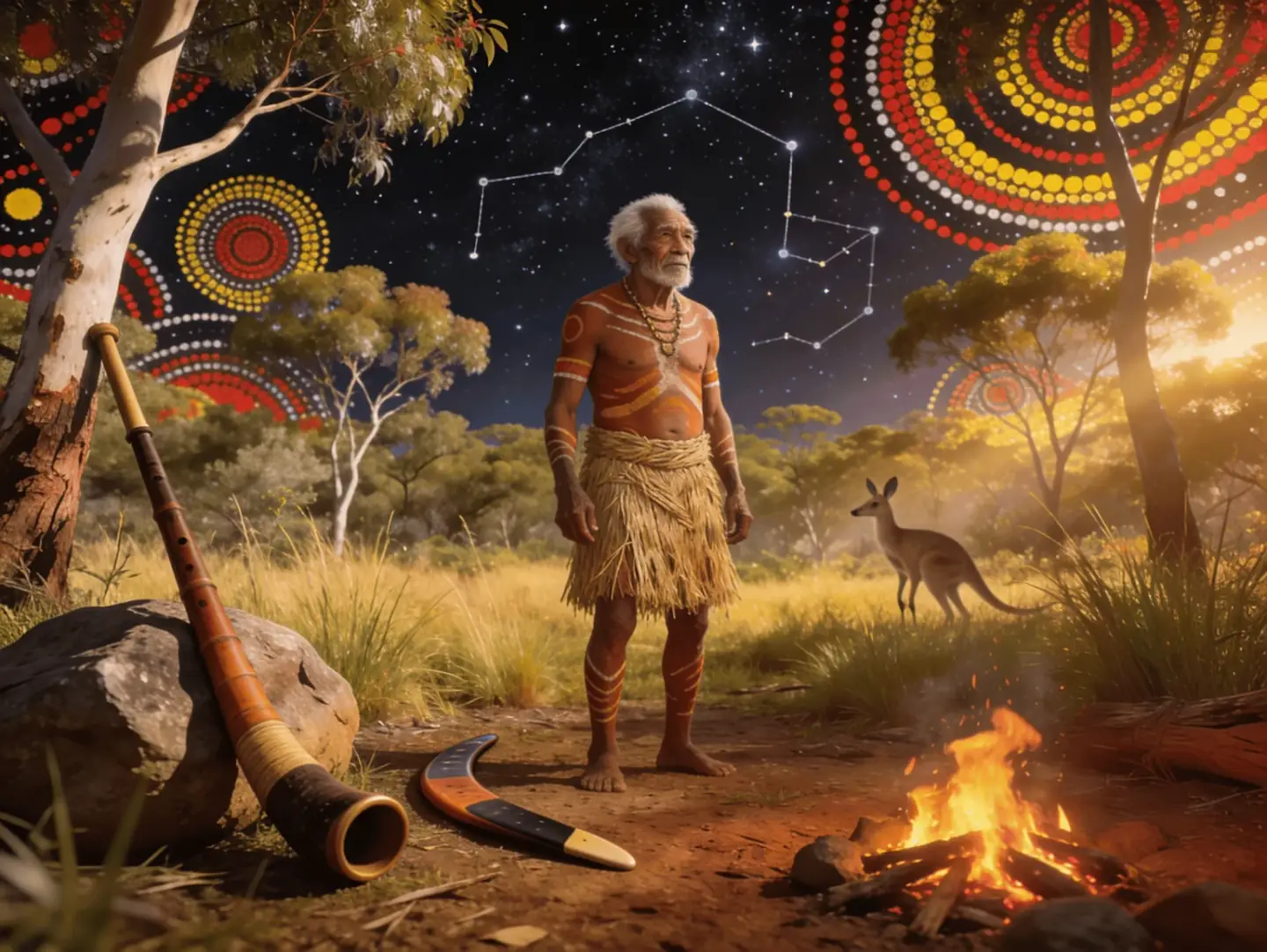 60 minutes per classIndigenous Australia in VRReal dances filmed in Far North Queensland, Australia.See the session
Step into the vibrant traditions of Chinese culture with our exhilarating Chinese Dragon Dance workshop.
Tell us the date you have in mind and we'll come back within one working day with options for your school.